Silver cabinet — History & Facts
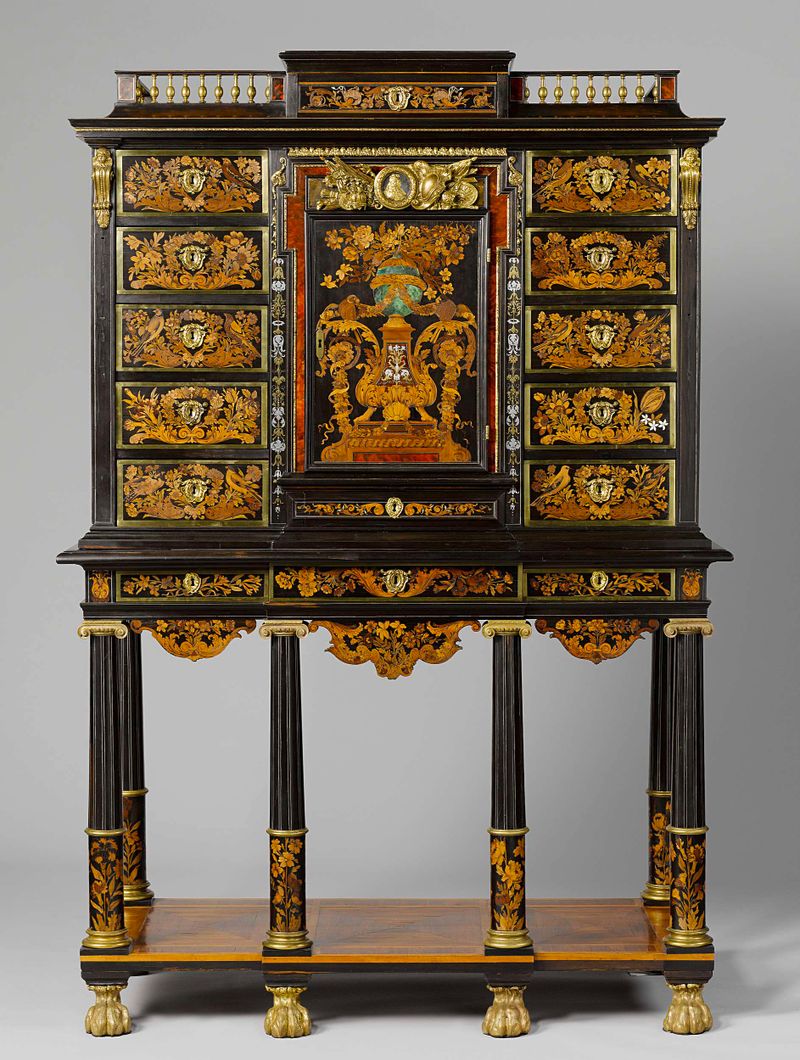
When did color learn to lie? The allure of something that glimmers and beckons often masks deeper desires, inviting us to ponder the truth behind appearances. Focus on the interplay of light and shadow across the polished surfaces of the cabinet, where every inch seems to whisper secrets. Look closely at the intricate details carved into the silver, revealing a craftsmanship that merges both elegance and the seductive power of minimalism. The smooth, reflective quality captures the surrounding environment, suggesting that there is more than mere ornamentation at play; it is a portal into a realm of aspiration and possession. Observe how the cabinet stands as a metaphor for unfulfilled longing.
Its striking form entices the viewer, yet the emptiness within speaks to a void that cannot be filled. The silver, while exquisite, is cold—a reminder that the true essence of desire often lies just beyond reach. The tension between beauty and emptiness invites contemplation on the nature of our own yearnings and the facades we construct to mask them. Jan Adolf Hillebrand created Silver cabinet during a time when decorative arts flourished, likely blending elements of the Art Nouveau movement with a personal touch.
The exact date remains elusive, but Hillebrand's work emerged amidst a rich cultural landscape that sought to elevate everyday objects into the realm of fine art. This cabinet embodies that ambition, reflecting both the aesthetic values of its time and the artist's desire to challenge the boundaries of craftsmanship.