
St John the Evangelist — History & Facts
Can paint confess what words never could? In St John the Evangelist, a quiet storm of faith and introspection captures the viewer's heart, whispering secrets that linger in the silence of the canvas. Look to the serene face of the evangelist, framed by an ethereal glow that emerges from the soft, muted colors. Notice how the gentle interplay of light and shadow carves his features, revealing a depth of thought that invites contemplation. The rich textures of his robe contrast with the delicate rendering of his hands, which cradle a chalice, hinting at both sacred and secular mysteries.
The composition draws your gaze inward, urging you to explore the layers of emotion interwoven in this sacred moment. Beneath the tranquil exterior, the painting resonates with an undercurrent of struggle. The downward gaze and slight furrow of the brow suggest a connection to the divine that is fraught with doubt and longing. The chalice, a symbol of both communion and sacrifice, implies not only the sharing of faith but also the weight of belief.
Here, the tension between the corporeal and the ethereal manifests — an embodiment of the human experience grappling with the divine. Created in the mid-16th century, this piece stands at a time when Arnt van Tricht was exploring the crossroads of faith and artistry in Antwerp. During this period, the Counter-Reformation was reshaping religious art, encouraging deeper emotional connections to spiritual subjects. Van Tricht's work reflects this evolving landscape, merging traditional iconography with a profound sensitivity that resonates with the viewer's own spiritual journey.
More Artworks by Arnt van Tricht
Browse all →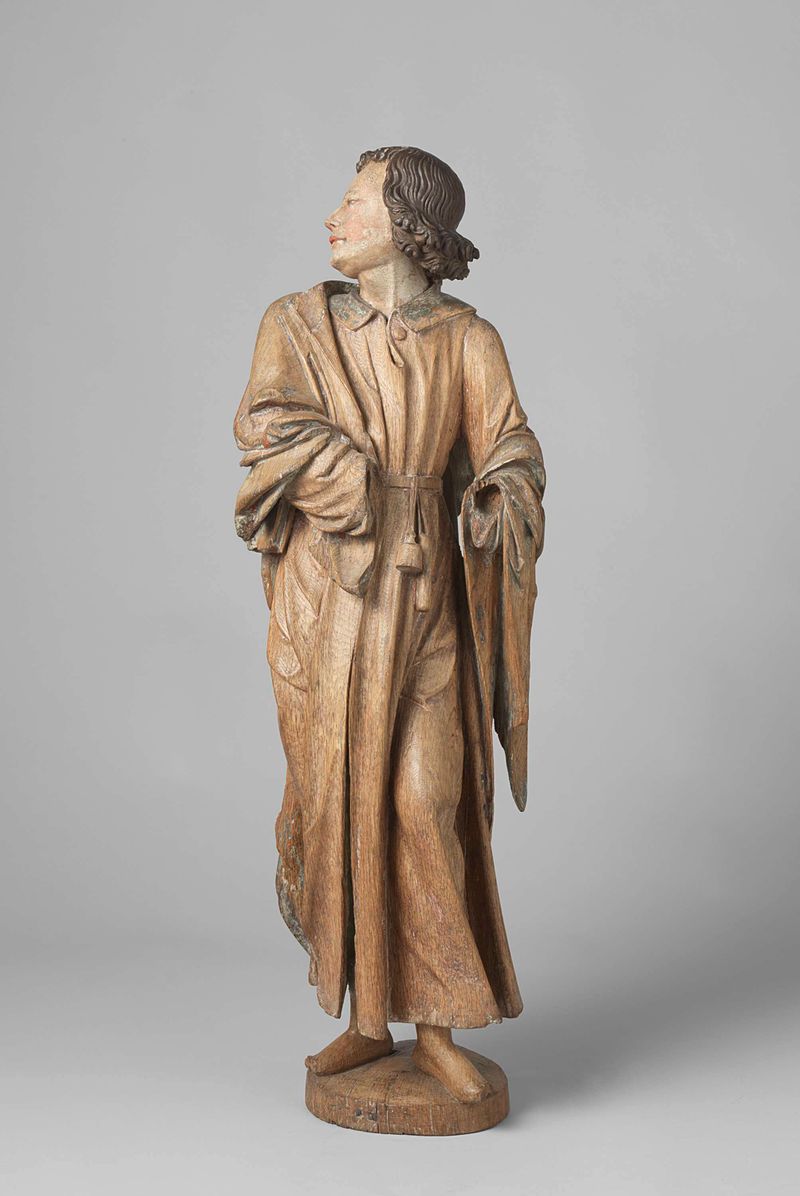
More Religious Art
Browse all →
The Return of the Prodigal Son
Rembrandt van Rijn

The Garden of Earthly Delights
El Bosco

Count Orgaz’ funeral
El Greco

The Hundred Guilder Print: the central piece with Christ preaching, the plate arched
Rembrandt van Rijn

The Descent from the Cross
Rogier van der Weyden

The return of the prodigal son
Rembrandt van Rijn