
The Descent from the Cross — History & Facts
In The Descent from the Cross, the viewer is invited into a moment of profound balance, where despair and hope intertwine with exquisite tension. Look to the center of the composition, where the figure of Christ, lifeless yet serene, is cradled gently by his grieving followers. Notice how van der Goes employs a soft yet striking palette of muted colors that reflects the solemnity of the moment. The careful arrangement of the figures draws the eye toward the diagonal lines created by their outstretched arms, embodying a palpable sense of weight and gravity.
Light bathes their faces, illuminating a spectrum of emotions, from sorrow to reverence, contrasting starkly against the dark background. Delve deeper, and you will find subtle elements that speak to the duality of the scene. The position of each figure communicates not just physical support but emotional burden as they grapple with the loss of a beloved leader. The tension between the figures is palpable—strength and fragility coexist, creating an almost prayer-like atmosphere that compels the viewer to reflect on mortality and sacrifice.
Each detail, from the texture of drapery to the expression of anguish, serves to reinforce the delicate balance of grief and grace. In the late 15th century, the artist was working in Bruges, a center of artistic innovation and exchange. This period was marked by a growing interest in realism and human emotion, which van der Goes embraced, weaving the divine into the fabric of everyday human experience. His work stands as a testament to the era's exploration of spiritual themes, merging the sacred with the deeply personal.
More Artworks by Hugo van der Goes
Browse all →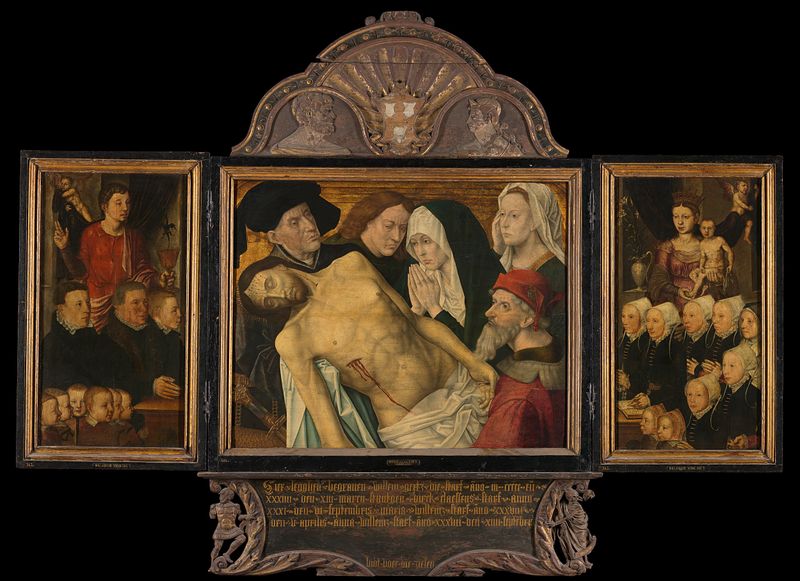
More Religious Art
Browse all →
The Return of the Prodigal Son
Rembrandt van Rijn

The Garden of Earthly Delights
El Bosco

Count Orgaz’ funeral
El Greco

The Hundred Guilder Print: the central piece with Christ preaching, the plate arched
Rembrandt van Rijn

The Descent from the Cross
Rogier van der Weyden

The return of the prodigal son
Rembrandt van Rijn