Discover insights about this artwork
The Flower Girl — History & Facts
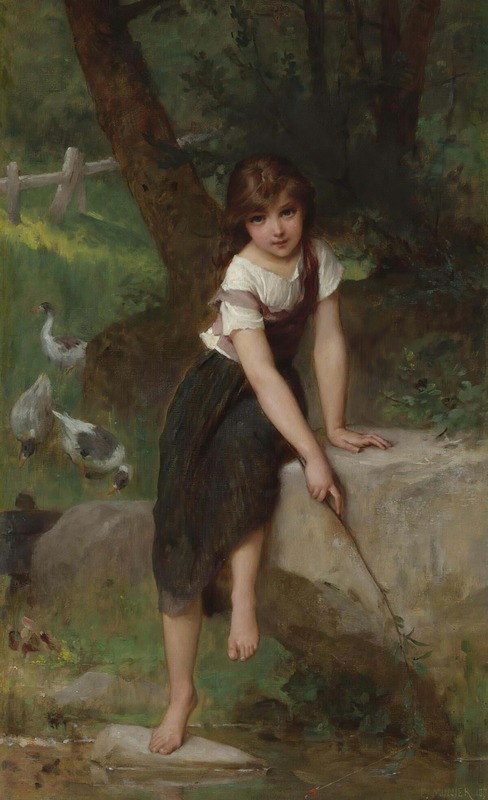
In The Flower Girl, Émile Munier presents a young girl surrounded by a vibrant array of flowers. The colors are rich and lively, with various shades of pink, yellow, and green dominating the scene. The girl, dressed in a simple yet elegant outfit, appears to be gently holding a bouquet.
The background is softly blurred, emphasizing the girl and her floral companions. The painting showcases Munier's skillful use of oil on canvas, which allows for a smooth blending of colors and a realistic portrayal of the girl's features. The brushwork is detailed, capturing the delicate textures of the flowers and the girl's clothing. Light plays a significant role, illuminating the girl's face and highlighting the vibrancy of the flowers.
This attention to detail enhances the overall lifelike quality of the work. Émile Munier was known for his ability to capture the innocence and beauty of childhood. This painting, created in the 1880s, reflects the Realism movement, focusing on everyday subjects and emotions. An interesting fact about this work is that it exemplifies Munier's fascination with nature, as he frequently included floral elements in his compositions.
The Flower Girl remains a beloved piece that resonates with viewers for its charm and warmth.