
The Reverend John Cotton of Newton — History & Facts
Can beauty exist without sorrow? The reverend stands as a testament to resilience, yet whispers of decay linger in the air, haunting the frame like shadows of the past. Look to the center where the figure of Reverend John Cotton commands attention, draped in rich, dark garments that contrast with the pallid backdrop. The soft, diffused light gently illuminates his face, revealing a nuanced expression that embodies both wisdom and weariness. Notice the intricate lace at his collar, a delicate detail that shows the artist's meticulous craftsmanship, serving as a reminder of the reverend's status while hinting at the fragility of life itself. As you absorb the painting, consider the powerful dichotomy between the vibrancy of his presence and the somber undertones woven throughout.
The reverend's hands rest on a stack of books—symbols of knowledge and faith—but the slight wear on the edges speaks of inevitable decay. This contrast between permanence and transience invites reflection on the spirituality of the subject and the inevitable passage of time, making each glance at the figure feel like both an embrace and a farewell. Attributed to John Smibert and painted between 1735 and 1750, this work emerged in a time when colonial America was forging its identity, blending European artistic traditions with its own burgeoning cultural landscape. In the midst of personal upheaval and professional uncertainty, Smibert's work captured the souls of his subjects with a depth that resonated through the ages, mirroring the complex interplay of faith, intellect, and the fleeting nature of existence.
More Artworks by Attributed to John Smibert
Browse all →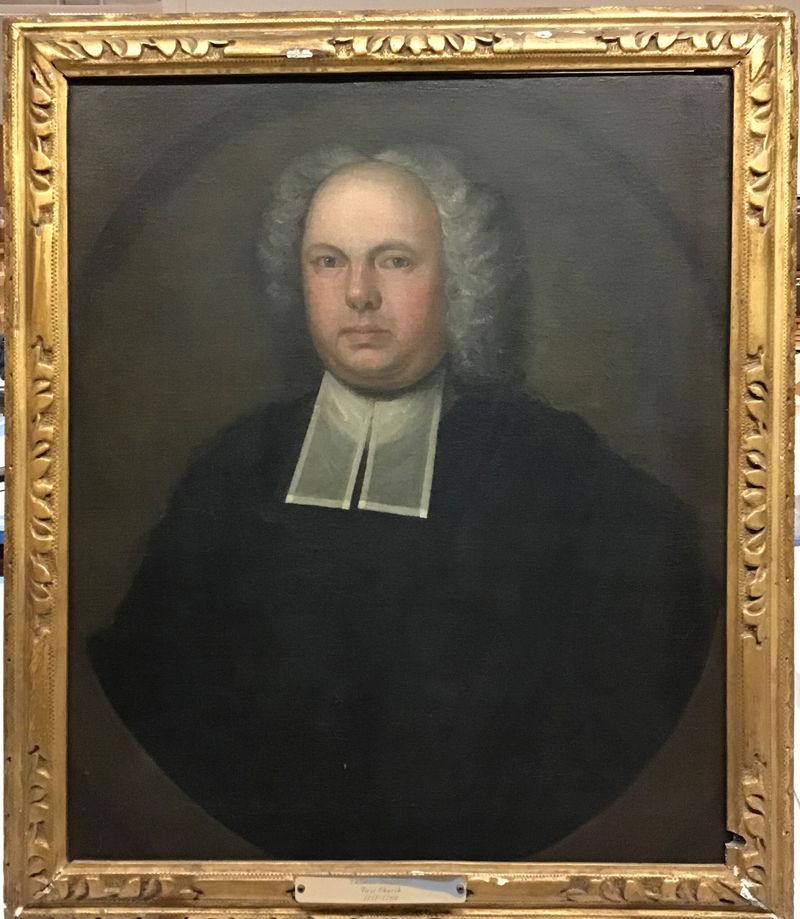
More Portrait Art
Browse all →
Las meninas
Diego Velázquez

Self-portrait with a Bandaged Ear and Pipe
Unidentified artist

Girl with a Pearl Earring
Johannes Vermeer

The Sampling Officials of the Amsterdam Drapers’ Guild, Known as ‘The Syndics’
Rembrandt van Rijn

The Hundred Guilder Print: the man seen on the back in the lower left corner
Rembrandt van Rijn

Portrait of Dr Gachet
Vincent van Gogh