
The Virgin and Child with Angels — History & Facts
Did the painter know this moment would outlive them? In The Virgin and Child with Angels, a serene yet profound revelation unfolds, capturing an eternal bond that transcends time and space. Look to the center of the composition, where the gentle figures of the Virgin and Child radiate warmth and tenderness. Notice how the delicate drapery of Mary’s robe shimmers in rich blues and soft whites, contrasting beautifully against the golden halos that encircle their heads. The child, cradled lovingly, gazes up with innocent wonder, while the angels beside them offer a halo of ethereal light framing this divine connection.
The gentle play of light enhances the soft features, creating an inviting atmosphere that draws the viewer into this intimate moment. As you explore the surrounding details, subtle emotional tensions arise. The angels, each distinct in expression, convey a spectrum of feelings from joy to reverence, inviting contemplation on the divine and the human experience. The contrasting colors symbolize not only the sacredness of the scene but also the innocence of childhood against the backdrop of celestial grace.
This interplay suggests a layered understanding of motherhood and divinity, where the personal and universal converge. Around 1450, Apollonio de Giovanni di Tommaso painted this masterpiece during a time when the Renaissance was blossoming in Italy. Artistic innovation thrived as artists sought to bring greater depth and realism to sacred subjects. Apollonio, influenced by the prevailing trends of naturalism and emotion, crafted this work amidst a rich tapestry of humanism, marking a pivotal moment in the evolution of religious art.
More Artworks by Apollonio de Giovanni di Tommaso
Browse all →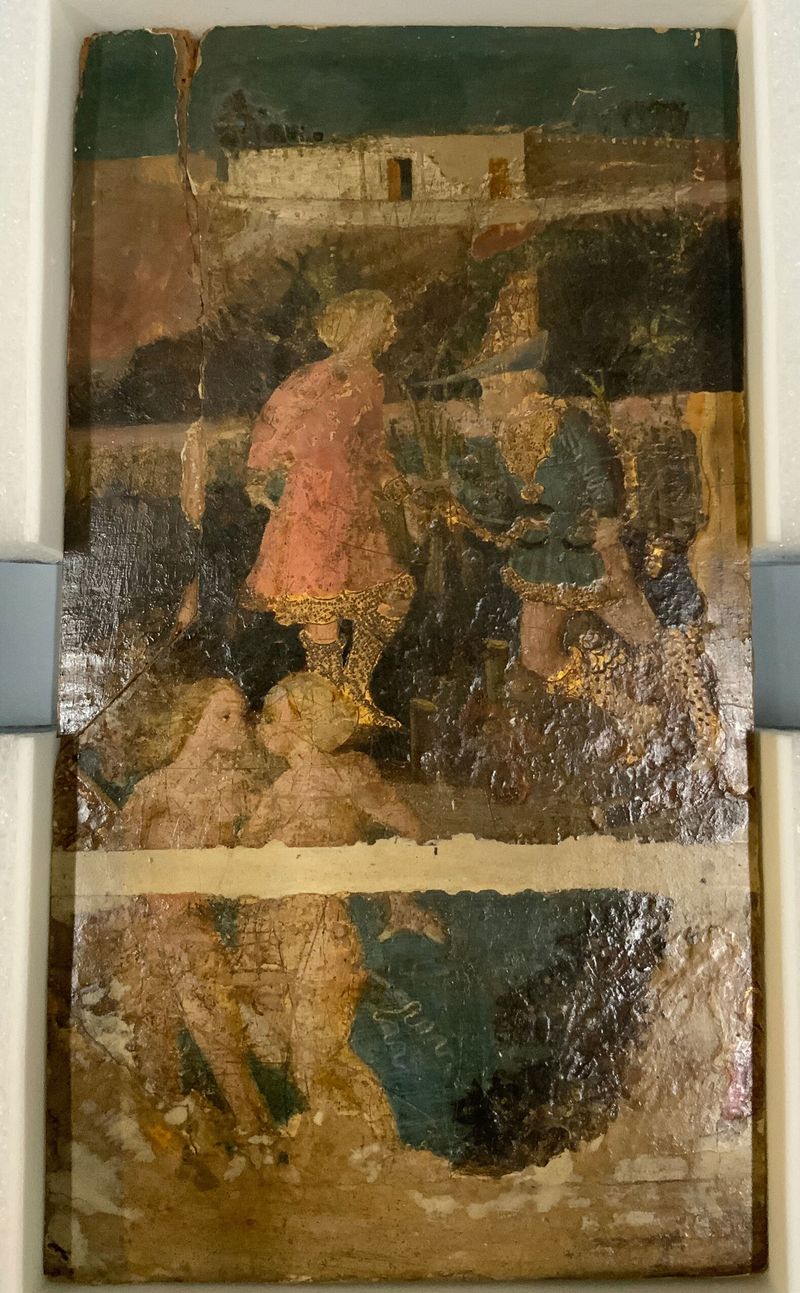
More Religious Art
Browse all →
The Return of the Prodigal Son
Rembrandt van Rijn

The Garden of Earthly Delights
El Bosco

Count Orgaz’ funeral
El Greco

The Hundred Guilder Print: the central piece with Christ preaching, the plate arched
Rembrandt van Rijn

The Descent from the Cross
Rogier van der Weyden

The return of the prodigal son
Rembrandt van Rijn