
Tobias, the Archangel Raphael, and Saint Catherine of Alexandria — History & Facts
What if silence could speak through light? In Tobias, the Archangel Raphael, and Saint Catherine of Alexandria, a delicate dance of figures and luminosity unfolds, inviting us to explore the movement and stillness within its frame. Look to the center where Tobias, poised and youthful, engages with the archangel, whose wings are subtly unfurled, suggesting both a divine presence and an imminent journey. The gentle brushwork captures the fluidity of drapery, while soft pastels dominate the palette, allowing the figures to radiate an ethereal glow. Notice how the light cascades down upon Tobias, illuminating his features with a halo-like effect, contrasting with the deeper shades enveloping Saint Catherine, who stands to the side, her gaze transfixed upon the scene. Delve deeper into the emotional contrasts at play; the exuberance of youth stands in juxtaposition to the contemplative serenity of Saint Catherine, whose stillness anchors the composition.
The archangel, a mediator between the divine and earthly realms, embodies movement through ethereal wings, hinting at the transformative journey that lies ahead for Tobias. Each brushstroke resonates with the tension between the sacred and the secular, merging the figures into a cohesive narrative of faith and destiny. Raffaellino del Garbo created this work during the late 15th to early 16th century, a time when the Renaissance was flourishing in Florence. Positioned within a vibrant artistic community, he was influenced by the growing emphasis on humanity and realism.
This period witnessed a shift towards integrating narrative depth and emotional resonance in sacred art, aligning perfectly with the delicate balance of movement and stillness in this captivating piece.
More Artworks by Raffaellino del Garbo
Browse all →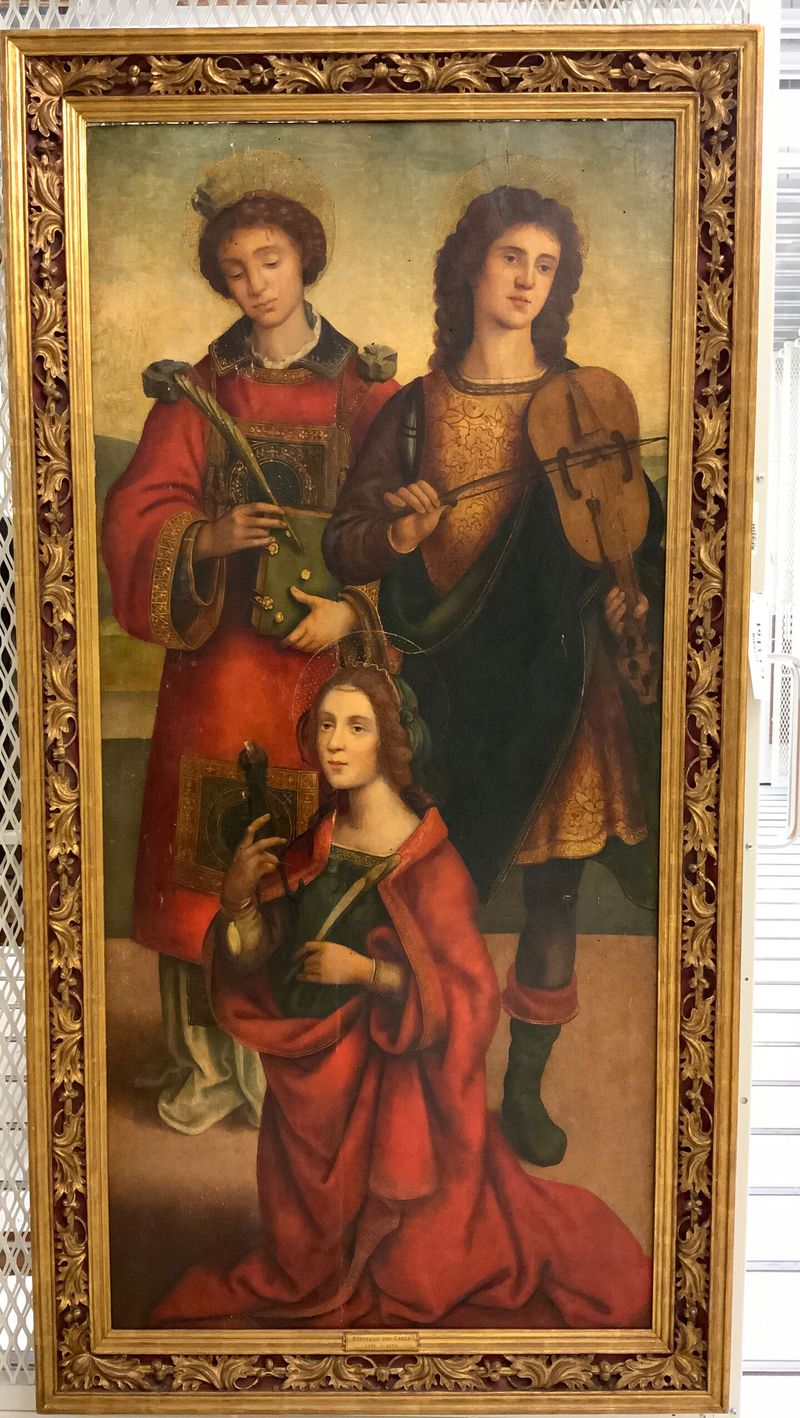
More Religious Art
Browse all →
The Return of the Prodigal Son
Rembrandt van Rijn

The Garden of Earthly Delights
El Bosco

Count Orgaz’ funeral
El Greco

The Hundred Guilder Print: the central piece with Christ preaching, the plate arched
Rembrandt van Rijn

The Descent from the Cross
Rogier van der Weyden

The return of the prodigal son
Rembrandt van Rijn