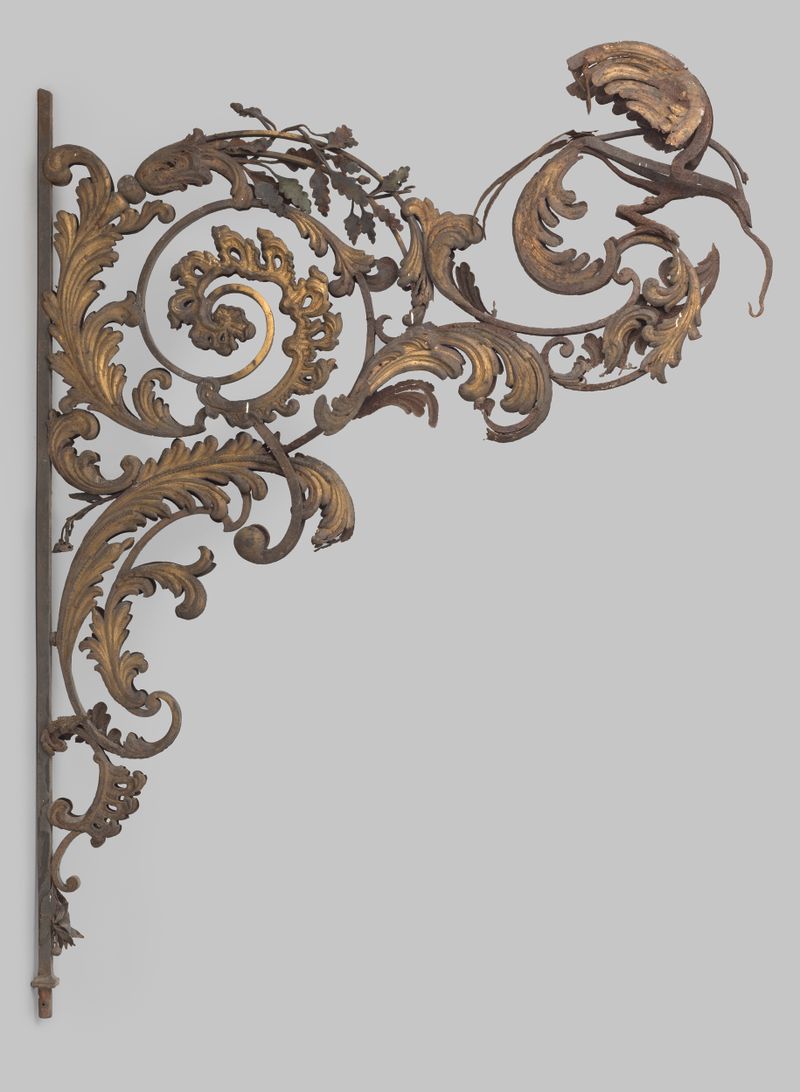
Uithangbord Jean Lamour, verz. Mannheimer. — History & Facts
When did color learn to lie? In the delicate interplay of hues and textures, Uithangbord invites viewers to question the very nature of illusion and reality, as it dances between truth and artifice. Look to the center of the composition, where a vibrant cobalt blue unfurls like a sky illuminating the intricate carvings. The symmetrical design captures the eye, leading you along the elegantly crafted lines down towards the inviting threshold of what seems like a door to another world. Notice how the light catches the gilded details, creating a shimmering effect that plays tricks on the mind, challenging your perception of depth and dimension. Beneath the surface, the piece reveals a tension between artistry and craftsmanship.
While the bright colors evoke a sense of joy, there is an underlying contrast to the somber reality of everyday life for those who might have used this signpost. The juxtaposition of the ornate design against a historical backdrop speaks to the aspirations of a society grappling with change, embodying both commercial ambition and the fragility of illusion itself. Created amid a bustling artistic community in the late 17th to early 18th centuries, the artist was deeply invested in the decorative arts revolution occurring in France. During this time, the fusion of artistry with functionality flourished, as artisans like him navigated the transition from Baroque to Rococo styles, all while reflecting the tensions of a society moving towards modernity.