
Virgin and Child — History & Facts
Is this a mirror — or a memory? The tender bond between mother and child encapsulates the essence of creation, evoking a sense of both timelessness and intimacy. Focus on the serene expressions of the Virgin and her infant son, who are enveloped in a warm embrace of soft hues. Notice how the gentle light cascades across their figures, illuminating the delicate features of their faces while casting subtle shadows that breathe life into the scene. The intricate drapery of their garments flows gracefully, revealing the artist's mastery in texture and detail. This artwork reveals a profound emotional tension between the sacred and the earthly.
The Virgin’s tranquil gaze speaks of unconditional love and maternal devotion, while the child’s tiny hands seem to reach out towards the viewer, inviting connection. The juxtaposition of their serene poses against the rich background colors heightens the sense of spiritual presence, reminding us of the divine nature of creation woven into every moment of life. Girolamo di Benvenuto di Giovanni del Guasta created this piece during the transition from the late Renaissance to the early Baroque period, around the turn of the 16th century. Living in Italy, a hub of artistic innovation and religious fervor, he contributed to the evolving styles of the time, reflecting a growing fascination with emotional depth and human experience.
His work captures the essence of this transformative era, merging traditional religious themes with a renewed appreciation for the personal and intimate.
More Artworks by Girolamo di Benvenuto di Giovanni del Guasta
Browse all →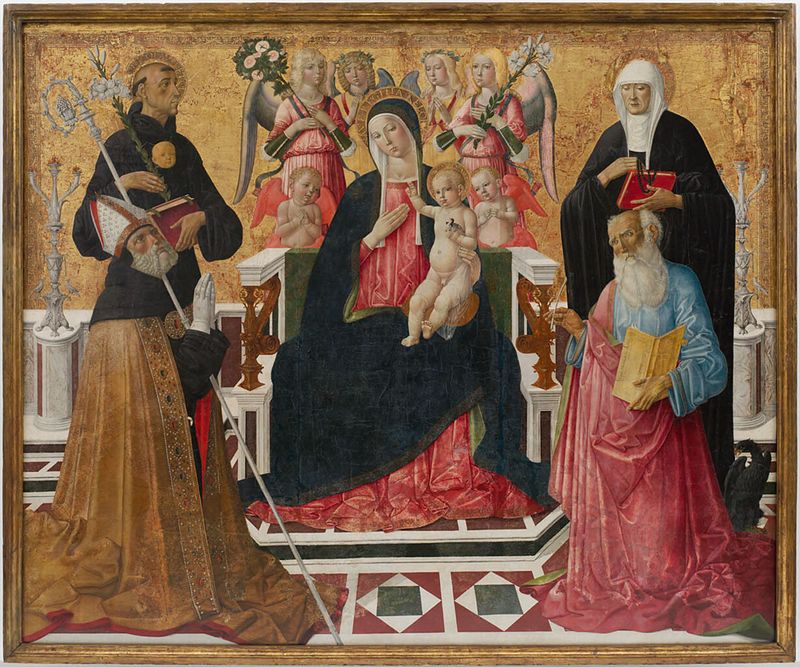
More Religious Art
Browse all →
The Return of the Prodigal Son
Rembrandt van Rijn

The Garden of Earthly Delights
El Bosco

Count Orgaz’ funeral
El Greco

The Hundred Guilder Print: the central piece with Christ preaching, the plate arched
Rembrandt van Rijn

The Descent from the Cross
Rogier van der Weyden

The return of the prodigal son
Rembrandt van Rijn