
Zittend meisje — History & Facts
What if silence could speak through light? In the stillness of Zittend meisje, a young girl’s thoughtful gaze offers a poignant reflection of solitude amid a world on the brink of transformation. Look to the left at the gentle curve of her seated form, draped in a soft, flowing garment that captures the delicate interplay of light and shadow. The artist’s meticulous brushwork brings out the texture of her dress, while the warm hues enveloping her convey both comfort and introspection. Notice how the light filters in from an unseen source, illuminating her face with a quiet intensity that draws the viewer into her inner world, inviting contemplation. Within this serene moment lies a tension that resonates deeply with the spirit of change.
The girl’s expression hints at unspoken thoughts, perhaps a yearning for the freedom that would soon characterize the age of revolution sweeping across Europe. The contrast between her delicate features and the weight of her stillness evokes a sense of longing, mirroring the societal shifts that were beginning to take shape. Each nuance whispers of hopes and dreams, as well as the burdens of an uncharted future. Created between 1814 and 1859, this work reflects both the artist's personal journey and a significant era in art history.
Working in the Netherlands during a time of social upheaval, Van der Kellen was influenced by the romantic ideals of his contemporaries, who sought to capture the essence of human emotion. This period marked a departure from classical norms, embracing more intimate depictions of daily life—a shift that resonates powerfully in this contemplative piece.
More Artworks by David van der Kellen (1804-1879)
Browse all →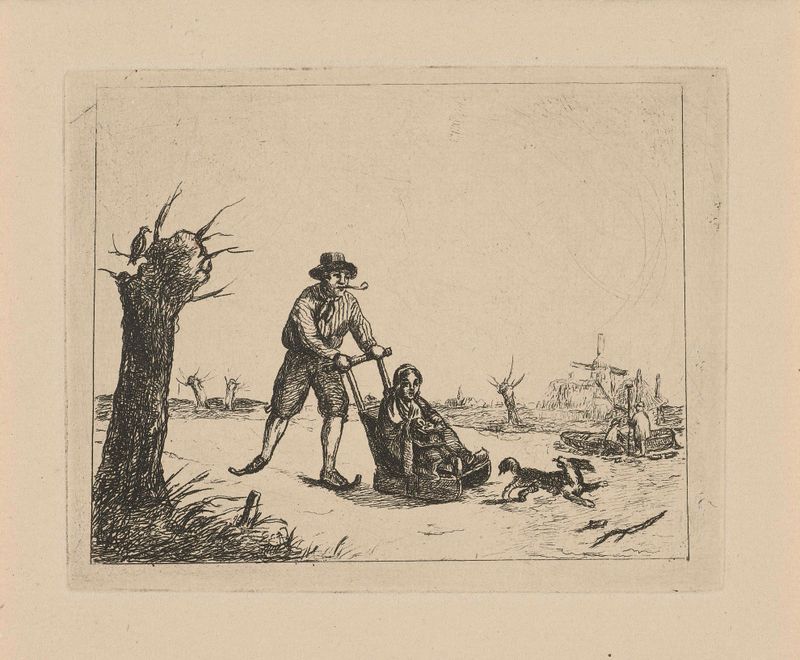

More Portrait Art
Browse all →
Las meninas
Diego Velázquez

Self-portrait with a Bandaged Ear and Pipe
Unidentified artist

Girl with a Pearl Earring
Johannes Vermeer

The Sampling Officials of the Amsterdam Drapers’ Guild, Known as ‘The Syndics’
Rembrandt van Rijn

The Hundred Guilder Print: the man seen on the back in the lower left corner
Rembrandt van Rijn

Portrait of Dr Gachet
Vincent van Gogh