
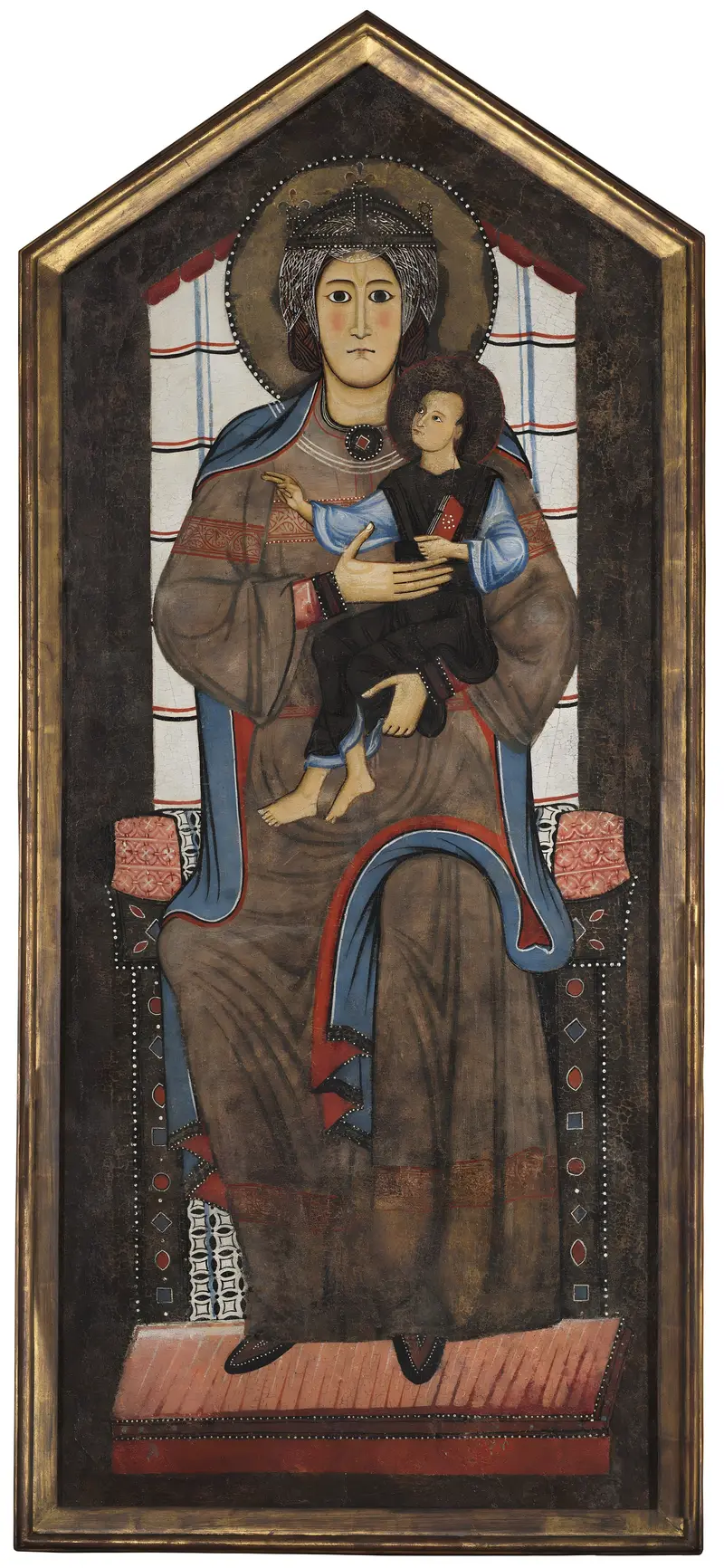
Italian, 1370–1400
The Master of Camerino was an Italian painter active during the late 14th century, primarily known for his contributions to the Gothic style. His exact birth and death dates are not well-documented, but he is believed to have been active around 1370 to 1400. The artist is named after the town of Camerino, where several of his works were created. He is thought to have been influenced by the Sienese school of painting, which is evident in his use of vibrant colors and intricate details. The Master of Camerino's work is characterized by a blend of religious themes and a focus on the human figure, often depicted with a sense of grace and elegance. His most notable works include altarpieces and frescoes, which can be found in various churches and museums in Italy. The significance of the Master of Camerino lies in his role in the transition from the Gothic to the early Renaissance style, marking a pivotal moment in the evolution of Italian art.
1 artwork