
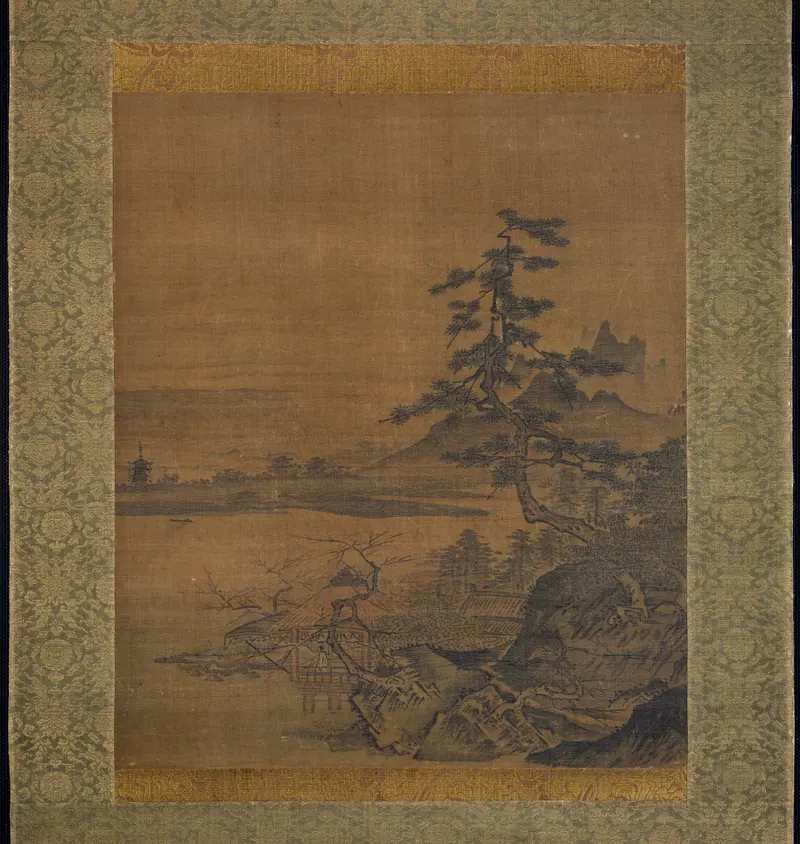
Japanese, 1420–1506
The School of Sesshu refers to a group of Japanese ink painters and artists who were influenced by the techniques and philosophies of Sesshū Tōyō, a prominent 15th-century Japanese painter. Sesshū is recognized for his mastery of ink wash painting and his ability to blend Chinese and Japanese artistic traditions. Born in 1420 in the Okayama Prefecture, Sesshū trained in the Chinese style of painting and later developed his distinctive approach that emphasized simplicity and the beauty of nature. His works often depict landscapes, Zen themes, and the spiritual connection between humans and nature. The School of Sesshu continued to flourish after his death in 1506, influencing generations of artists in Japan and contributing to the development of the Nihonga style. Major works attributed to Sesshū include 'The Splashed Ink Landscape' and 'The Four Seasons'. The School of Sesshu is significant for its role in establishing a uniquely Japanese aesthetic that merged traditional Chinese techniques with local sensibilities.
1 artwork