
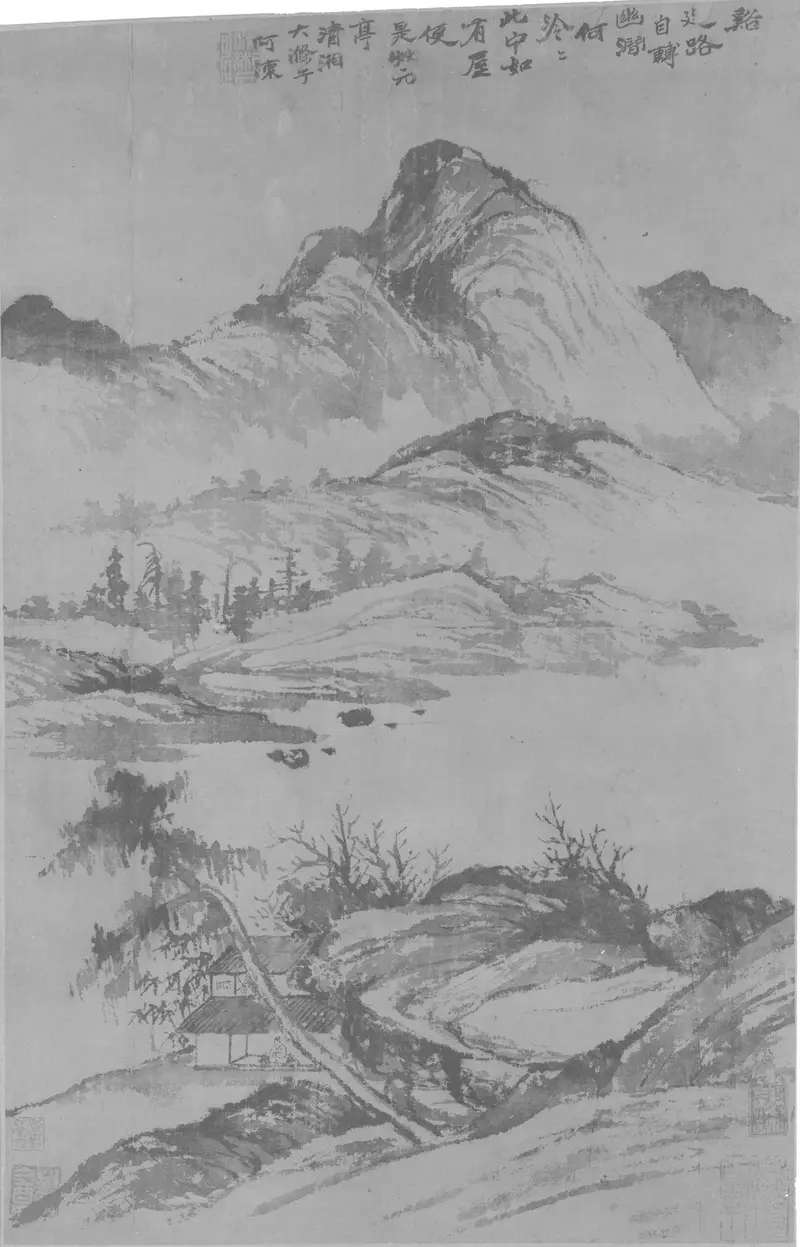
Shitao, also known as Zhu Ruoji, was a Chinese painter and poet of the late Ming and early Qing dynasties. He is recognized as one of the most significant figures in Chinese ink painting and is celebrated for his innovative approach to traditional Chinese art. Shitao was born in 1642 in the city of Yangzhou, Jiangsu province, and died in 1707. He was a member of the Tang clan and became a monk after the fall of the Ming dynasty, which deeply influenced his artistic expression. Shitao studied under the renowned painter and calligrapher, Wang Hui, and later developed his own distinctive style that combined elements of traditional Chinese painting with personal expression.
Throughout his career, Shitao produced numerous works characterized by bold brushwork, expressive use of color, and a focus on the emotional and spiritual aspects of nature. His major works include landscapes, flower-and-bird paintings, and calligraphy, which reflect his philosophical beliefs and the influence of Zen Buddhism. Shitao's writings on art theory, particularly his treatise "The Record of the Stone and the Ink," provide insight into his artistic philosophy and techniques.
Shitao's significance lies in his role as a bridge between the classical traditions of Chinese painting and the evolving styles of the Qing dynasty. His innovative techniques and personal style have inspired generations of artists, making him a pivotal figure in the history of Chinese art.
1 artwork