
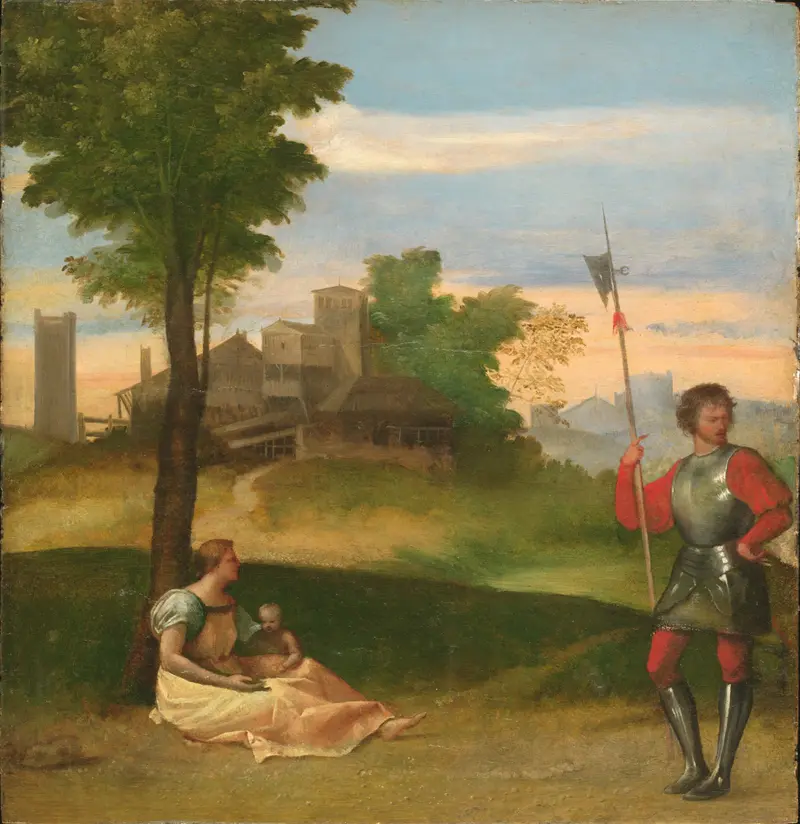
Titian, born Tiziano Vecellio, was an Italian painter of the Renaissance, active primarily in the Venetian school. He is regarded as one of the most important figures in Western art history, known for his innovative use of color and masterful handling of paint. Titian was born around 1488 in Pieve di Cadore, a town in the Veneto region of Italy, and he died on August 27, 1576, in Venice. He received his early training in Venice, likely under the guidance of Giovanni Bellini and later Giorgione, which greatly influenced his artistic development. Throughout his career, Titian produced a wide range of works, including portraits, religious subjects, and mythological themes, showcasing his versatility and skill.
Titian's major works include 'Assumption of the Virgin,' 'Venus of Urbino,' and 'The Rape of Europa.' His style evolved over time, moving from the detailed and precise forms of his early works to a more expressive and dynamic approach in his later pieces. He was a pioneer in the use of color and brushwork, which had a lasting impact on the development of Baroque painting. Titian's ability to convey emotion and movement through color and composition set him apart from his contemporaries.
Titian's significance in art history extends beyond his own lifetime; he influenced generations of artists, including Rembrandt, Rubens, and Van Dyck. His work is characterized by a deep understanding of human emotion and the natural world, making him a central figure in the transition from the Renaissance to the Baroque period. Titian's legacy continues to be celebrated, and his paintings are held in major museums around the world.
1 artwork