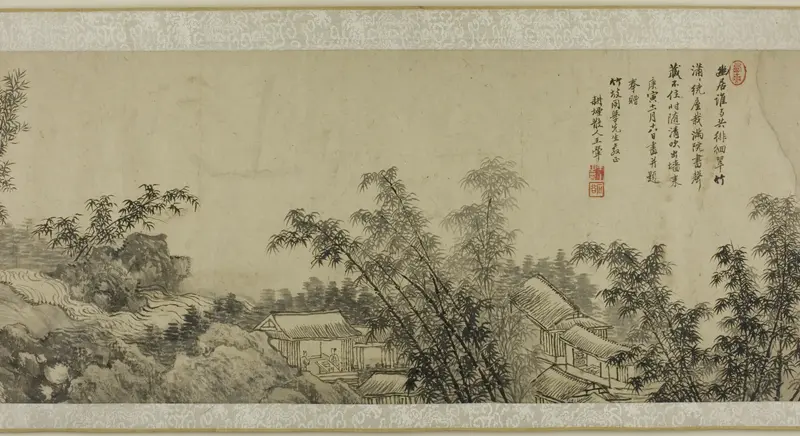
Chinese, 1632–1717
Wang Hui was a Chinese painter and calligrapher, active during the Qing dynasty. He is regarded as one of the most prominent landscape painters of his time and is known for his contributions to the development of traditional Chinese painting. Wang Hui was born in 1632 in the city of Hangzhou, Zhejiang province. He studied under the renowned painter and scholar, Wu Li, and became a member of the prestigious Eight Eccentrics of Yangzhou, a group known for their innovative styles. His career flourished during the Kangxi Emperor's reign, where he gained recognition for his detailed and expressive landscapes. Major works include 'The Riverbank' and 'The Four Seasons', which showcase his mastery of brushwork and composition. Wang Hui's style is characterized by meticulous attention to detail and a harmonious blend of traditional techniques with personal expression. His significance lies in his role in preserving and advancing the landscape painting tradition in China, influencing generations of artists that followed.
2 artworks