A Bedouin Encampment — History & Facts
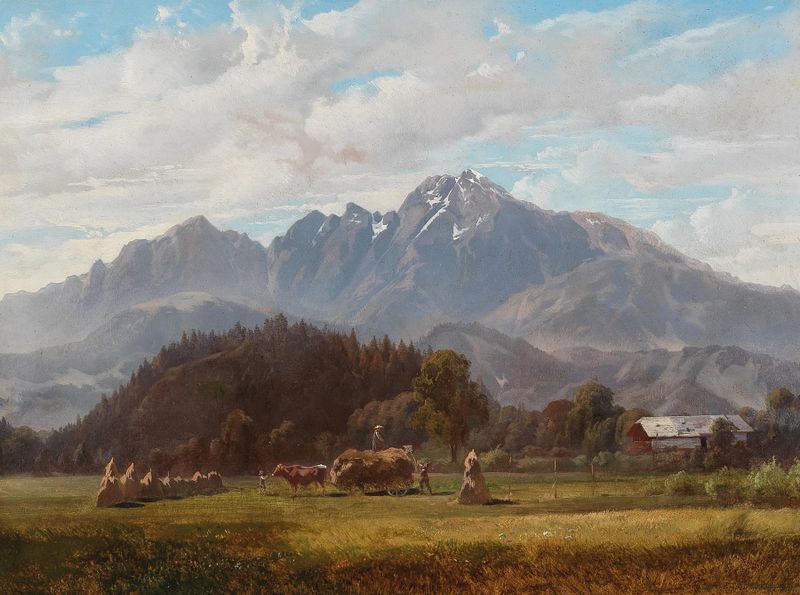
In the stillness of each brushstroke, there exists an obsession with truth, a desire to capture fleeting moments that echo through time. Focus first on the vibrant hues of ochre and deep blues that dominate the canvas, drawing your gaze toward the encampment nestled in a rugged landscape. Notice how the tents, arranged with a deliberate asymmetry, invite a sense of intimacy and community. The warmth of the earth tones contrasts sharply with the cool shadows, suggesting both shelter and the harshness of the surrounding wilderness. Delve deeper into the subtle details: the way a flicker of sunlight catches the fabric of the tents, hinting at the lives within, or how the figures are rendered with both motion and stillness, embodying the rhythm of a nomadic existence.
This tension between movement and pause speaks to an eternal struggle between freedom and belonging, the heart’s yearning for connection amidst solitude. Joseph Heicke painted this work during a period of exploration and fascination with the cultures of the East, likely influenced by his travels. Life at that time was shifting, with European artists beginning to embrace more diverse subjects outside traditional landscapes, moving towards a deeper understanding of humanity and its narratives. The canvas remains a testament to Heicke’s commitment to capturing the essence of a world that, despite its distance, resonates with universal themes of connection and home.