A Bird Hunter on a Riverbank — History & Facts
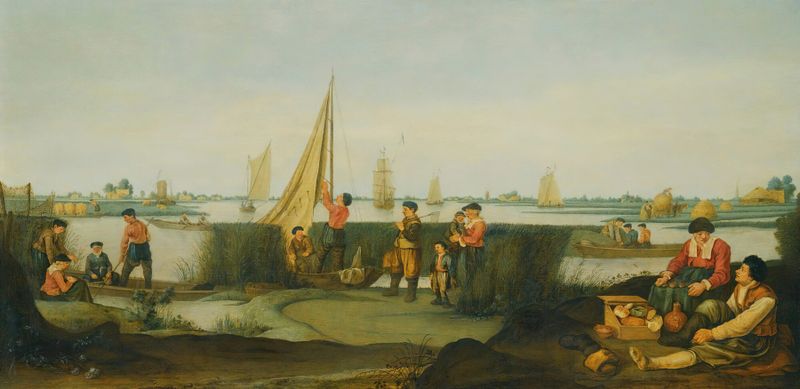
Could beauty survive in a century of chaos? The question lingers, even as nature and humanity collide in the delicate balance of existence. Look to the foreground: a solitary figure stands poised on the riverbank, rifle in hand. The muted greens and browns of the landscape envelop him, yet the brilliance of the sky draws the eye upward, casting a gentle light upon the scene. The way Cabel masterfully captures the reflections in the water reveals his keen observation of nature.
Notice how the ripples disturb the stillness, echoing the hunter's anticipation, while dappled sunlight dances on the surface, creating a serene contrast to the tension in his stance. The emotional weight lies in the juxtaposition of the hunter and the tranquil environment. He is a symbol of survival in an unforgiving world, yet his stillness suggests contemplation rather than aggression. The lush flora that surrounds him serves as a reminder of life's vibrancy, while the gun signifies an intrusion upon that beauty.
This tension resonates with deeper implications about humanity’s relationship with nature, where each decision impacts the delicate equilibrium. Between 1626 and 1631, Arent Arentsz. Cabel painted this work during a time when the Netherlands was striving for stability after years of conflict in the Eighty Years' War. The art world of the period was marked by a burgeoning interest in realism and landscapes, as artists sought to depict the natural world with authenticity and emotional depth.
Cabel’s focus on the relationship between man and nature reflects both the anxieties of his time and the timeless beauty that endures despite chaos.