A Castle in Umbria — History & Facts
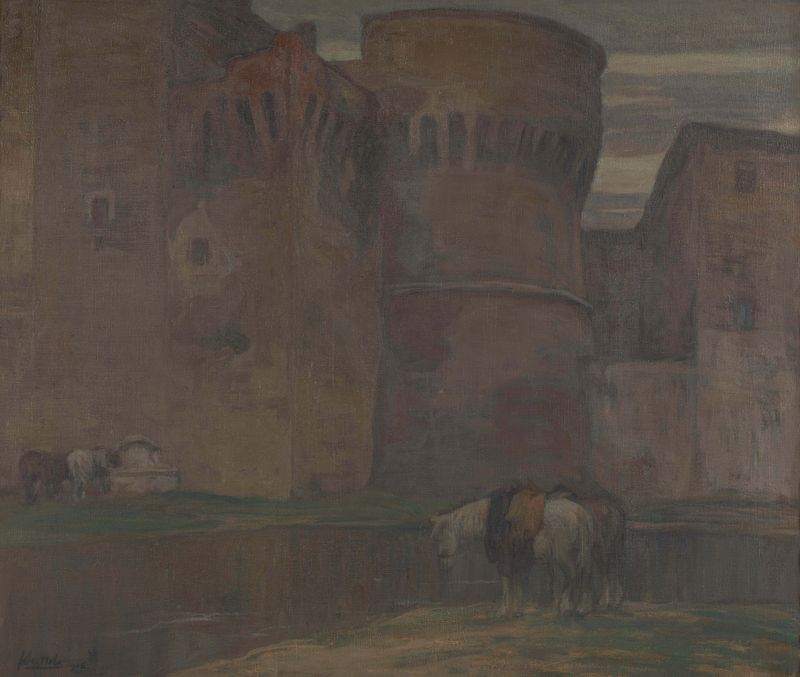
In the gentle embrace of twilight, desire flutters like a moth caught in the gilded light of a castle’s window. Within the confines of stone walls, a silent yearning echoes, imbued in every brushstroke. Look to the left at the castle, its contours softened by a warm palette of ochres and golds. The light dances across the textured surface, illuminating intricate details that speak of age and mystery.
Notice how the artist juxtaposes the sturdy stone with the delicate, ethereal sky, creating a tension that invites viewers to linger in the moment, to ponder what lies beyond the fortress’s reach. Behind the façade of beauty, there lies an undercurrent of longing. The stillness of the landscape contrasts sharply with the vibrant hues, suggesting a world that craves connection but remains isolated. This duality invites contemplation, revealing the complexities of desire—how it can be both alluring and unfulfilled—much like the castle itself, standing proud yet solitary against the backdrop of a fading day. Ferruccio Scattola painted this work in 1906 while living in Italy, a time marked by artistic experimentation and a burgeoning sense of nationalism.
The artist, influenced by the Symbolist movement, sought to capture the essence of emotions and desires through landscape. Immersed in a world shifting towards modernity, he imbued A Castle in Umbria with timeless themes that resonate even today.