A Chamois High in the Mountains — History & Facts
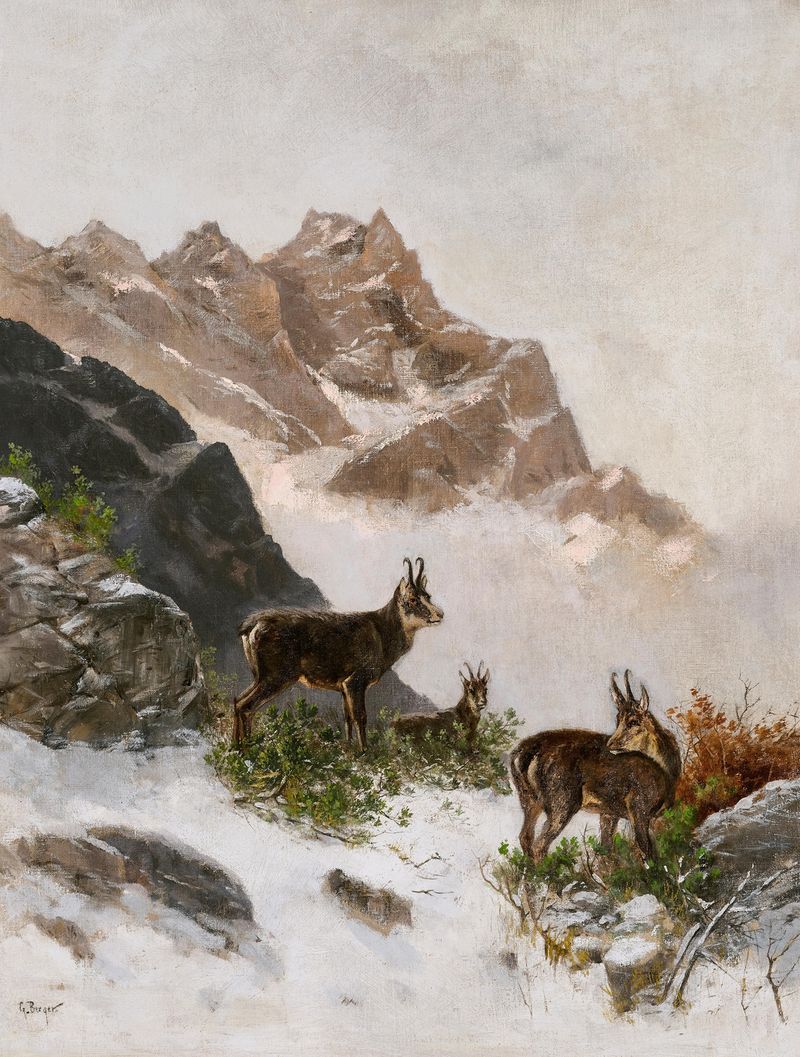
Can beauty exist without sorrow? This question lingers in the air, haunting the pristine landscape captured in the artwork, where a solitary chamois stands against the backdrop of soaring peaks and deep valleys. The scene evokes a profound sense of emptiness, inviting the viewer to ponder the delicate balance between nature’s majesty and the isolation it can impose. Look to the center where the chamois emerges, a striking figure of grace amidst the rugged terrain. The artist employs soft, muted colors, allowing the creature's tawny coat to harmonize with the earth below.
Notice how the light subtly caresses the contours of the mountains, casting long shadows that stretch across the canvas, creating a sense of depth and solitude. Every brushstroke conveys both detail and a broader sense of vastness, drawing the eye to the horizon where the sky meets the jagged peaks. As you take in the scene, observe the contrast between the vibrancy of life embodied by the chamois and the stark emptiness surrounding it. The isolation of the animal mirrors the vastness of its environment, thus emphasizing the inherent vulnerability of existence within such beauty.
This poignant juxtaposition raises questions about the nature of solitude and the silent struggle for survival in the wild, where freedom may often come with a heavy price. Georg Berger painted this piece during a time when he was deeply influenced by the Romantic movement’s reverence for nature. The exact date remains uncertain, but it is believed to have been created in the late 19th century, a period marked by a growing fascination with the sublime and the emotive power of landscapes. As artists sought to convey deeper meanings through their work, Berger’s depiction reflects both the breathtaking allure of the mountains and the profound sense of isolation that can accompany such beauty.