A Distant View of Norwich — History & Facts
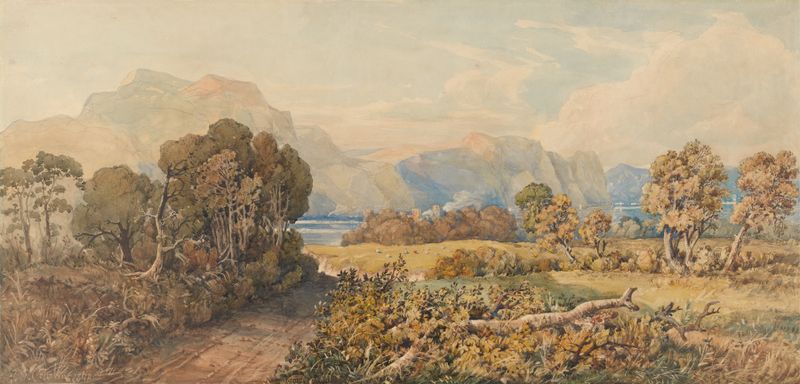
Could beauty survive in a century of chaos? The question lingers like the mist over the tranquil landscape depicted in the painting. In A Distant View of Norwich, the viewer is invited to explore a world poised between the sublime and the unsettling, echoing the fears of its time. Look to the left at the soft, rolling hills that cradle the city, their gentle curves inviting your gaze toward the intricate spires and rooftops of Norwich. Notice how the light dances across the canvas, filtering through a veil of clouds that suggests both promise and foreboding.
The muted palette—a blend of silvery blues and deep greens—offers a serene yet haunting atmosphere, luring you into a contemplative reverie while hinting at the underlying tensions of an era on the brink of transformation. Subtle contrasts emerge from the way nature and architecture coexist. The organic shapes of the landscape seem to embrace the rigid lines of human structures, yet the looming clouds convey a sense of dread. Here, in these delicate brushstrokes, lies the tension between life's fleeting beauty and the fear of imminent change.
The distant city, while picturesque, also represents a potential chaos that could erupt, a reminder of the fragility of peace in a world rife with uncertainty. John Joseph Cotman created this work during a period marked by shifting social and artistic landscapes in the late 18th century. Living in England, he was influenced by the Romantic movement, which sought to capture the essence of nature and emotion. This painting reflects Cotman’s quest for beauty amid the growing tumult of industrialization, hinting at the artist’s own fears for the future of his beloved countryside and the traditions it represented.