A Ditch — History & Facts
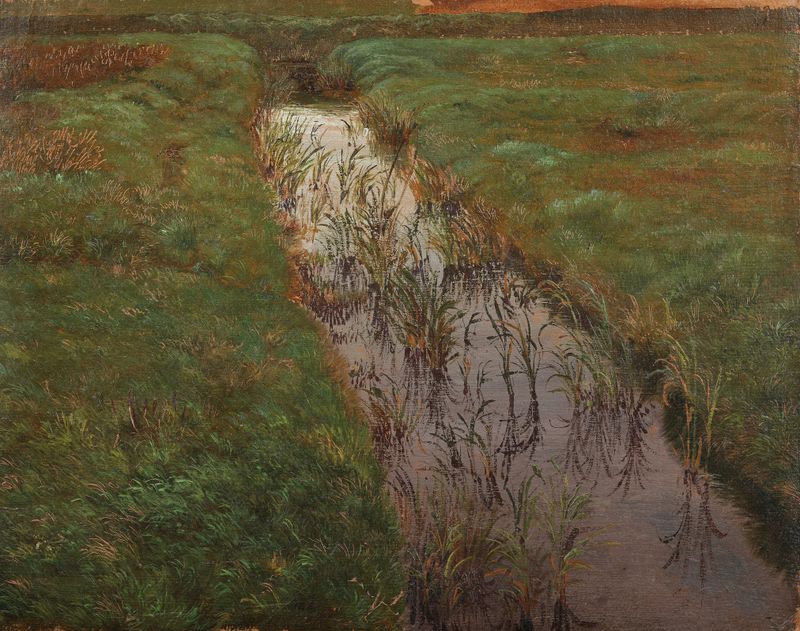
In the quiet moments of decay, beauty lingers just beneath the surface. Look closely at the center of the canvas, where the hues of browns and greens converge. The brushstrokes are both deliberate and loose, creating a textured landscape that invites you to explore the interplay between life and decline. Notice how the soft light dances across the rotting vegetation, illuminating the delicate tendrils of grass that cling to the edges of the ditch.
This light, almost ethereal, reveals a world caught in the throes of transformation, where decay becomes a canvas for new beginnings. The contrast between vibrant colors and the grim subject matter evokes a profound sense of nostalgia. Each element, from the crumbling earth to the wilting plants, speaks of time's passage and the relentless cycle of existence. Hidden within the details are whispers of life that once thrived here, suggesting that decay is not merely an end but also a precursor to renewal.
The artist’s choice to depict this scene invites reflections on mortality, reminding us that beauty can be found in the most unexpected places. Created in 1850, the artist worked on this piece during a time when naturalism and realism were gaining momentum in European art. Living in Denmark, Frølich was influenced by the Romantic movement, which emphasized emotion and the sublime in nature. The social and political landscapes of Europe were tumultuous, and artists like him sought to convey deeper truths through their work, capturing the interplay of life, death, and the inescapable passage of time.