A Frightened Donkey — History & Facts
Can paint confess what words never could? In A Frightened Donkey, the depths of solitude and vulnerability emerge through the anxious expression of a single, trembling creature. Focus on the donkey's wide-eyed gaze, which captures a palpable fear that seems to radiate beyond the canvas. Notice how the artist skillfully uses muted earth tones to envelop the animal, creating a sense of isolation against the backdrop, where shadows merge into obscurity. Delicate brushstrokes lend texture to the donkey’s fur, while the subtle highlights on its coat suggest a flicker of hope amidst despair.
The composition draws you in, inviting empathy for the creature’s plight. Upon closer inspection, the tension between the donkey's fear and its surroundings reveals a profound commentary on loneliness. The creature's stance, poised yet hesitant, symbolizes the fragility of existence in the face of the unknown. Additionally, the sparse landscape underscores this isolation, contrasting the animal’s vulnerability against an expansive emptiness that seems both suffocating and liberating.
Each detail holds a mirror to our own fears of abandonment and the shared struggle of the unseen. In 1837, Moja painted this work during a period that saw the rise of Romanticism, where artists began to delve into emotive subjects and individual experiences. Living in Italy, he was influenced by a cultural shift that placed emphasis on personal expression and the exploration of emotion in art. This painting, with its poignant focus on a solitary figure, reflects both the artist's own introspections and the broader artistic movements of his time.
More Artworks by Federico Moja
Browse all →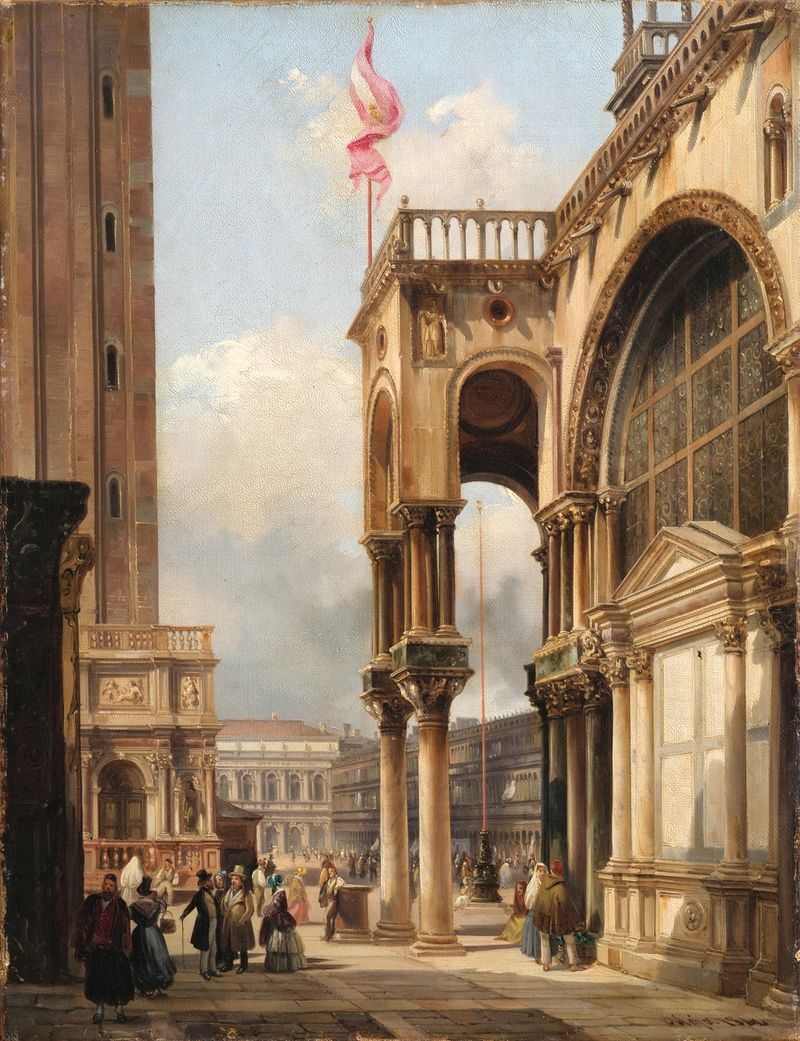
Venice, a View of St Mark’s Square
Federico Moja

Venice, a View of the Interior of San Mark’s Basilica
Federico Moja
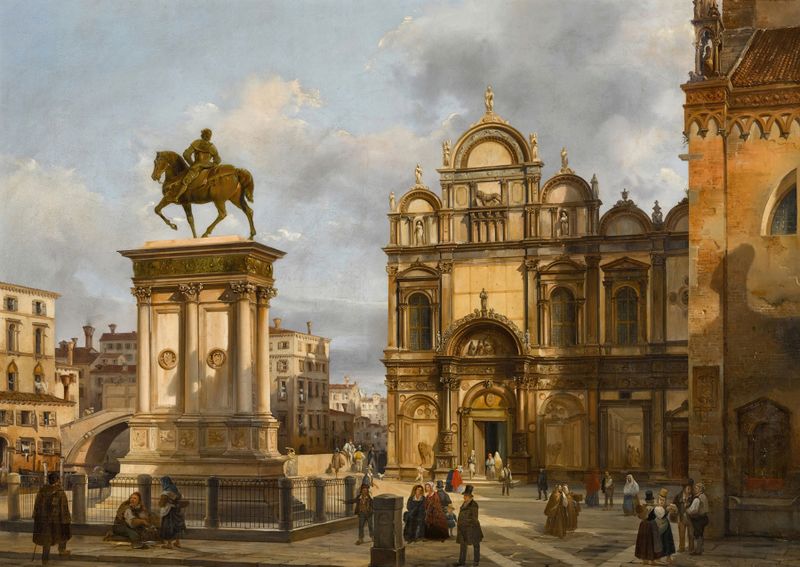
Venice, a View of the Campo Santi Giovanni e Paolo, with the Equestrian Monument to Bartolomeo Colleoni and the Scuola Grande di San Marco in the Background
Federico Moja

French country life
Federico Moja