A Glimpse of the Juniata from Sideling Hill — History & Facts
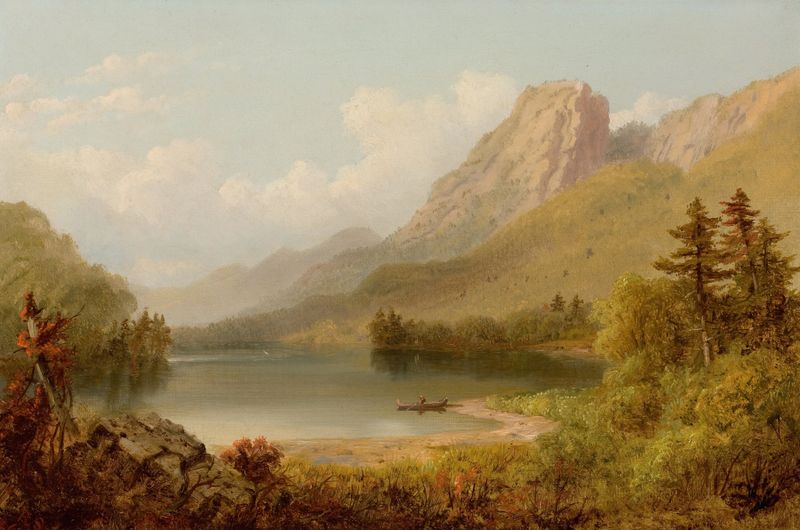
Could beauty survive in a century of chaos? In A Glimpse of the Juniata from Sideling Hill, the landscape offers a serene antidote to the turmoil of its time, inviting contemplation and melancholic reflection. Look to the left, where the gentle curve of the river unfurls against the backdrop of billowing hills. The painter's deft brushwork captures the play of light on water, creating a shimmering pathway that guides the eye deeper into the composition. Notice the delicate hues of green and brown, interspersed with the soft blues of the sky, which evoke a sense of harmony and tranquility.
Each stroke seems deliberate, as if the artist sought to preserve this fleeting moment in nature's embrace. Beneath the idyllic surface lies a profound tension. The sprawling landscape, while breathtaking, hints at the weight of history—the encroachment of industrialization, shifting lives, and the loss of untouched wilderness. The contrasting stillness of the scene stands in stark opposition to the unrest brewing in the world beyond the canvas.
This juxtaposition serves as a poignant reminder of the fragility of beauty amidst inevitable change. In 1893, Russell Smith was immersed in the American landscape tradition while living in Pennsylvania. His work reflected a growing concern for the effects of industrial progress on the natural world, a sentiment shared by many artists of his era. During this time, the country was grappling with rapid development and societal shifts, making his tranquil portrayal of the Juniata River a contemplative response to the chaos surrounding him.