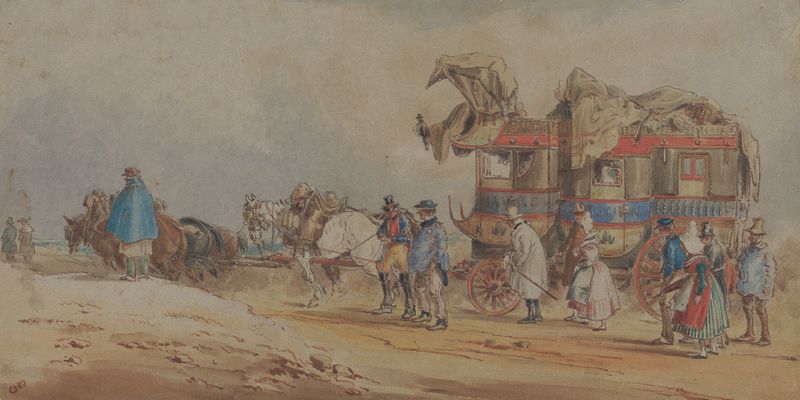
A Hay Wagon Drawn by Four Horses — History & Facts
Who listens when art speaks of silence? In the gentle embrace of nature, innocence emerges, captured forever in a moment of pastoral tranquility. Focus on the foreground where the hay wagon, sturdy and unassuming, jostles lightly in the sunlight. The play of light and shadow dances across the golden hay bales, each texture rendered with delicate precision. Look closely at the four horses, their powerful muscles taut beneath glossy coats, as they pull the burden of harvest through a lush expanse of green.
The sky unfurls above, a muted canvas of soft blues and whites, evoking a serene day that invites contemplation. Yet, within this serene scene lies a deeper narrative. The horses, embodiments of strength, contrast with the fragile innocence of the summer harvest, suggesting a balance between labor and leisure. Notice the figures in the background, their gazes turned inward, perhaps reflecting the quiet joys and burdens of rural life.
Each element—nature, labor, and silence—blends seamlessly, evoking a longing for simplicity and the lost art of listening to the whispers of the past. Created during a time of shifting artistic trends, the work reflects Charles Cooper Henderson's deep connection to rural themes. Little is known about the exact date of this piece, yet it embodies the charm of 19th-century pastoral life, a period when the artist captured the essence of England’s landscapes and its intimate relationship with agriculture. As urbanization surged, Henderson’s art served as a poignant reminder of innocence in a rapidly changing world.