A Landscape with Goatherders — History & Facts
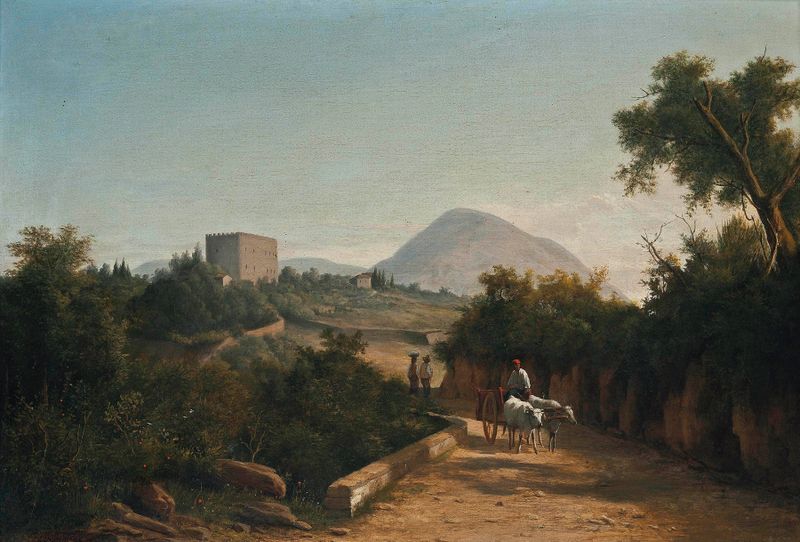
In A Landscape with Goatherders, the interplay of nature and solitude evokes a profound sense of grief, capturing not merely the scene but the weight of existence within it. Look to the left at the gentle rise of the verdant hills, where a soft yet vivid green blush contrasts with the muted browns and blues of the sky. Notice how the brushstrokes create an impression of depth—layers of color that invite you to wander deeper into the landscape. The goatherders, small figures in the vastness, stand still, their gestures intimate yet distant, lost in a world that feels both serene and sorrowful.
The light filtering through the clouds casts a diffuse glow over the scene, bridging the space between reality and an unspoken longing. As you explore, consider the quiet tension present in the goatherders’ expressions. Their calmness contrasts with the weighty clouds above, embodying the duality of peace amidst unacknowledged sadness. The scattered sheep, dotting the meadow like echoes of the past, represent memories—fleeting yet tethered.
This landscape, while tranquil, carries an undercurrent of loss that permeates the atmosphere, whispering of lives intertwined with the land yet burdened by their stories. In 1848, Karoly Marko the Younger painted this work amidst a tumultuous era in Hungary, where the struggle for independence was igniting a fervent nationalism. At this time, the artist was establishing his voice within the Romantic movement, emphasizing the emotional resonance of the sublime in nature. This painting reflects not just a personal vision, but also the collective grief and aspirations of a nation in flux, capturing a moment where both beauty and sorrow converge.