A Landscape With Hunters Near A Waterfall — History & Facts
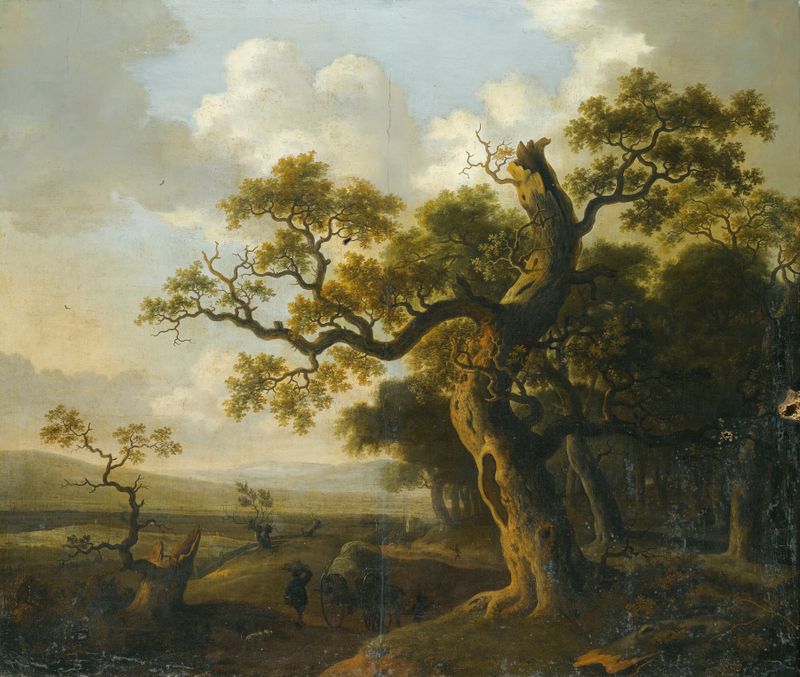
In the stillness of nature, a vast emptiness seems to echo, inviting us to confront the void within ourselves. Focus on the gentle cascade of water, where the waterfall spills from the canvas, its frothy white hues contrasting sharply against the earthy greens and browns. The hunters, poised and watchful, draw our gaze to the right, where their silhouettes blend into the wild surroundings. Notice how Appelman masterfully employs light, casting soft shadows that breathe life into the scene, while the trees frame the figures, creating a moment suspended in time. Yet, beneath the tranquil beauty lies an unsettling tension.
The hunters, seemingly at peace, are paradoxically entwined with the primal forces of nature, suggesting a deeper struggle for survival. The juxtaposition of the serene landscape with their intent expressions hints at the thin line between harmony and chaos. The expansive void of the background invites contemplation, reinforcing the notion that silence often holds more weight than the noise of action. Barend Appelman painted this work during a time when the Dutch art scene was evolving, likely in the late 19th century.
Influenced by Romanticism, he sought to capture the sublime beauty of nature while exploring themes of man’s relationship with the wilderness. This painting emerges from a period where artists were increasingly drawn to landscapes, reflecting both personal introspection and a fascination with the natural world, mirroring the societal shifts of the era.