A Moonlit River Landscape — History & Facts
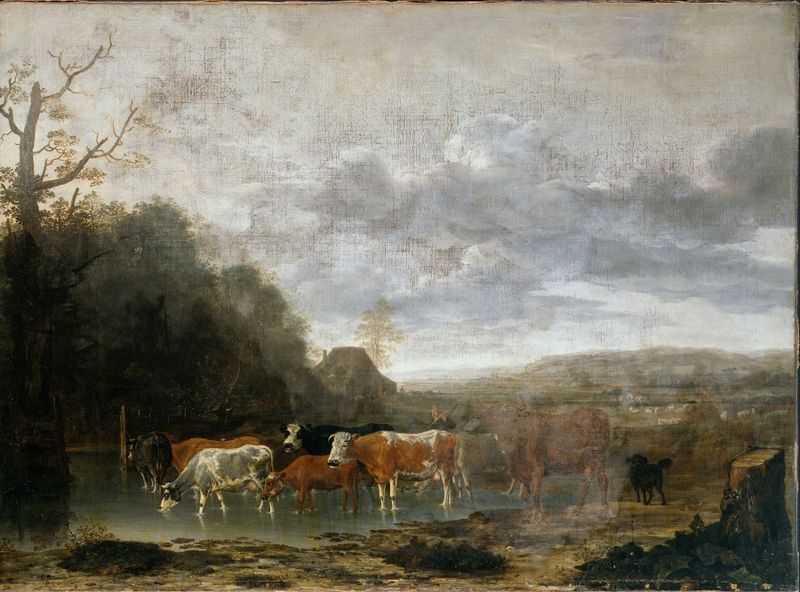
This sentiment resonates deeply within the lush strokes of a moonlit landscape, where nature's serenity masks the weight of time and legacy. Focus first on the luminous moon that bathes the scene in ethereal light. Its reflection dances on the gentle ripples of the river, drawing your gaze to the horizon, where dark silhouettes of trees stand sentinel against the night sky. The careful interplay of deep blues and silvery whites evokes a quiet majesty, while the delicate strokes reveal the artist's masterful technique — a delicate balance between illusion and reality, creating a moment suspended in time. Beneath the tranquil surface lies a profound tension; the stillness of the water contrasts with the vibrant life that once thrived along its banks.
Each brushstroke hints at stories untold — perhaps of quiet solitude, fleeting moments of joy, or the inevitable passage of time that claims all beauty. The landscape invites reflection, urging viewers to ponder the legacies we leave behind, encapsulated in the very essence of what once was. In 1645, Anthonie Van Borssum painted this work during a time when the Dutch Golden Age was flourishing, and the art world was alive with the exploration of light and nature. Amidst personal and societal changes, his approach captured the essence of his environment, blending realism with a deeper, introspective search for meaning.
This piece stands as a testament to that era, echoing the complex relationship between beauty and the legacy it creates.