A Mountain Landscape — History & Facts
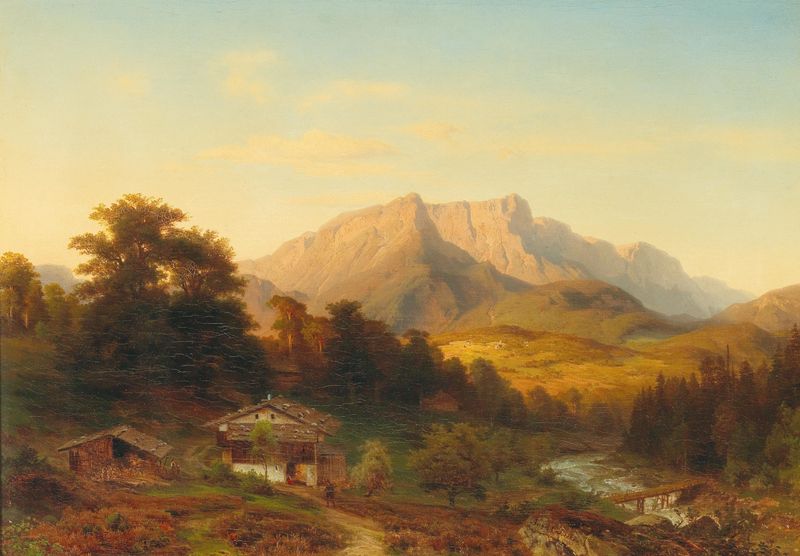
What if beauty was never meant to be finished? In the realm of nature, every mountain, every stream holds the promise of unfinished stories, inviting us to wander deeper into their embrace. Focus on the serene horizon where majestic peaks rise, their rugged silhouettes softened by gentle hues of violet and gold. Notice how the light falls upon the crags, lending an ethereal quality that transforms the landscape into a living tapestry. The subtle interplay of warm and cool tones directs your gaze to the harmonious balance between shadow and illumination, revealing the artist’s delicate hand in rendering a world both wild and inviting. Behind the vast expanse, there is an emotional resonance that speaks to the viewer's heart.
The mountains, with their stoic presence, signify strength, while the delicate clouds hint at the ephemeral nature of beauty. The calm water below reflects the grandeur above, creating a dialogue between the solid and the transient. This contrast invites contemplation on the relationship between permanence and change, urging us to recognize our own place within the natural order. Painted in 1863, this work emerged during a pivotal moment in August Becker's career, as he explored the landscapes of Germany.
The mid-19th century was marked by a growing interest in the Romantic movement, which celebrated the sublime aspects of nature. At this time, Becker was honing his skills, blending realism with a touch of idealism, and this painting encapsulates that ongoing quest to capture the essence of a world both expansive and intimate.