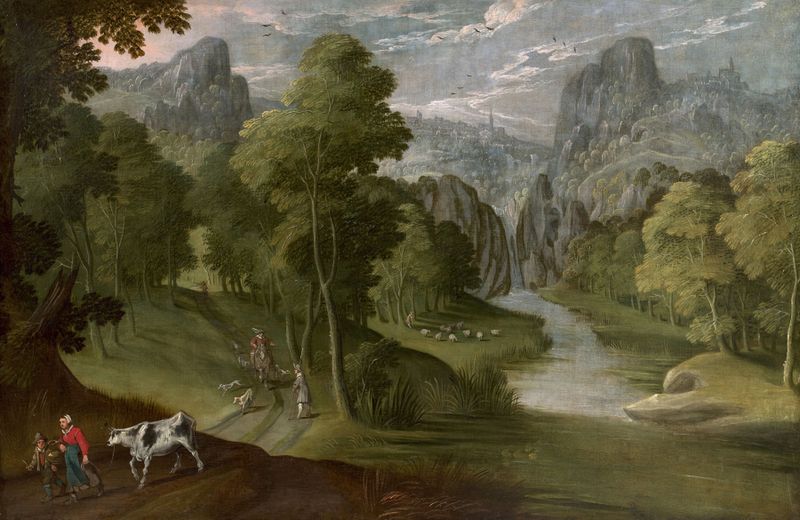
A mountainous river landscape, with water mills and a village beyond — History & Facts
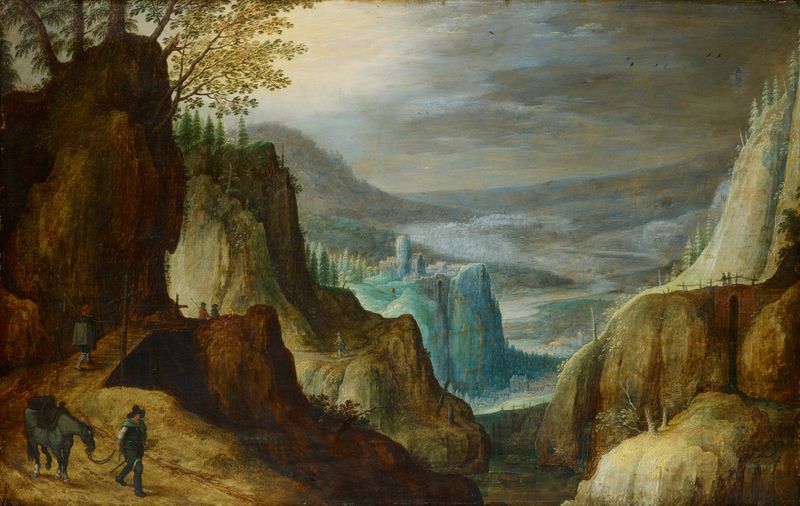
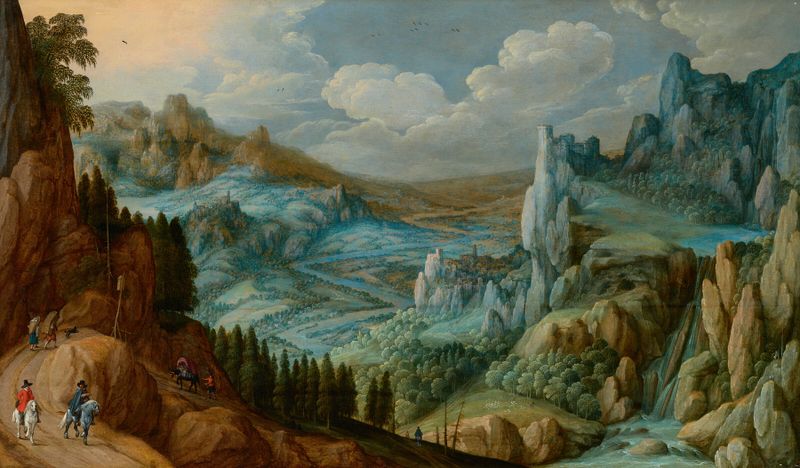
What if beauty was never meant to be finished? This notion whispers through the layers of light and shadow found within the serene expanse of nature, capturing both its fleeting splendor and enduring presence. Look to the left at the intricately rendered water mills, their wooden structures harmoniously blending with the vibrant hues of the landscape. Notice how the painter's brush captures the shimmering reflections in the river, where sunlight dances upon the water's surface, creating a textured interplay of light and dark. The composition invites your gaze to wander through the gentle undulations of the hills and the quaint village nestled beyond, each element contributing to a sense of timelessness amidst the ever-flowing water. Yet, beneath this picturesque façade lies a deeper narrative of life’s transience.
The water mills, powered by the rushing river, symbolize the relentless passage of time, while the distant village hints at human endeavor and community. The contrasts between the stability of the structures and the fluidity of the water evoke a tension between permanence and change, as if reminding the viewer that every moment of beauty is intertwined with the inevitability of mortality. Tobias Verhaecht created this work in the early 17th century, during a period characterized by emerging artistic trends in the Low Countries. He was known for his landscapes, influenced by the atmospheric effects of light common in the region.
This painting reflects a time when artists were beginning to explore more naturalistic representations, focusing on the relationship between humanity and the environment, as well as the saturated beauty found in everyday life.