
A Nocturno — History & Facts
What if silence could speak through light? The stillness of night often cradles dreams, whispering secrets only the heart can grasp. Focus on the gentle glow emanating from the horizon, where the faint light dances delicately across the canvas. Notice how the deep blues and blacks envelop the landscape, creating a cocoon of tranquility. The artist’s expert brushwork captures the ethereal quality of twilight, allowing viewers to feel the soft caress of a night breeze.
Each stroke seems to linger, inviting contemplation as shadows meld seamlessly into the whispers of the dawn. Within this nocturnal embrace, there lies a profound contrast between darkness and the flicker of illumination. The quiet streets, adorned with the silhouettes of trees and buildings, evoke a sense of solitude, yet the light emerges as a beacon of hope. This interplay suggests a deeper narrative, one that speaks to the transient nature of dreams and the quiet introspection that follows a long day.
Here, silence is not the absence of sound but a canvas upon which the soul projects its desires and fears. In 1911, Tavík František Šimon created this piece during a time of burgeoning modernist exploration in art. Living in Prague, he was influenced by the evolving landscape of European art, characterized by a shift towards emotive use of color and atmosphere. This work reflects his engagement with the dreamlike qualities of nocturnal scenes, capturing both the essence of his surroundings and his own introspective journey.
More Artworks by Tavík František Šimon
Browse all →
Charles Bridge
Tavík František Šimon
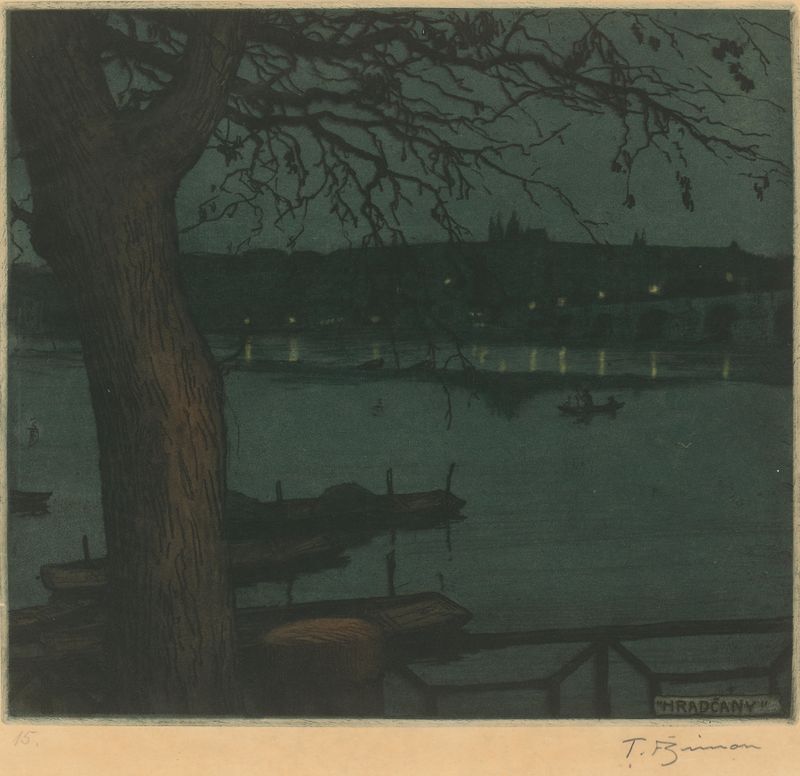
Pohľad na Hradčany z nábrežia
Tavík František Šimon
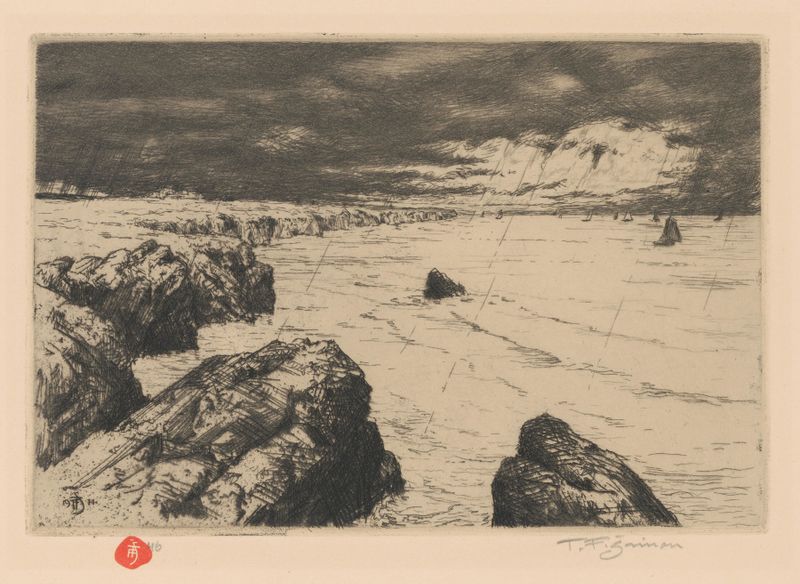
Bretónske brehy
Tavík František Šimon

Staromestská radnica
Tavík František Šimon
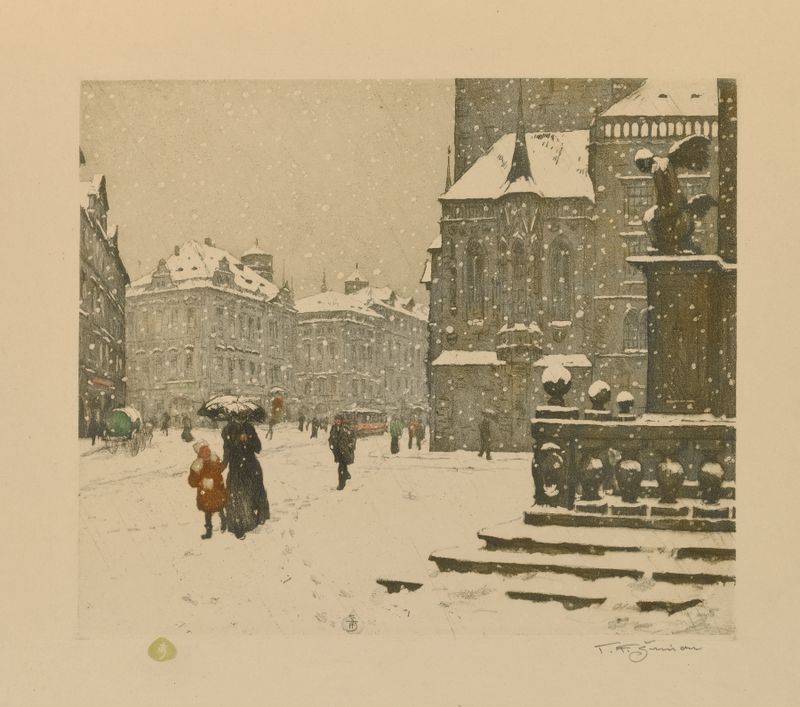
Prague
Tavík František Šimon
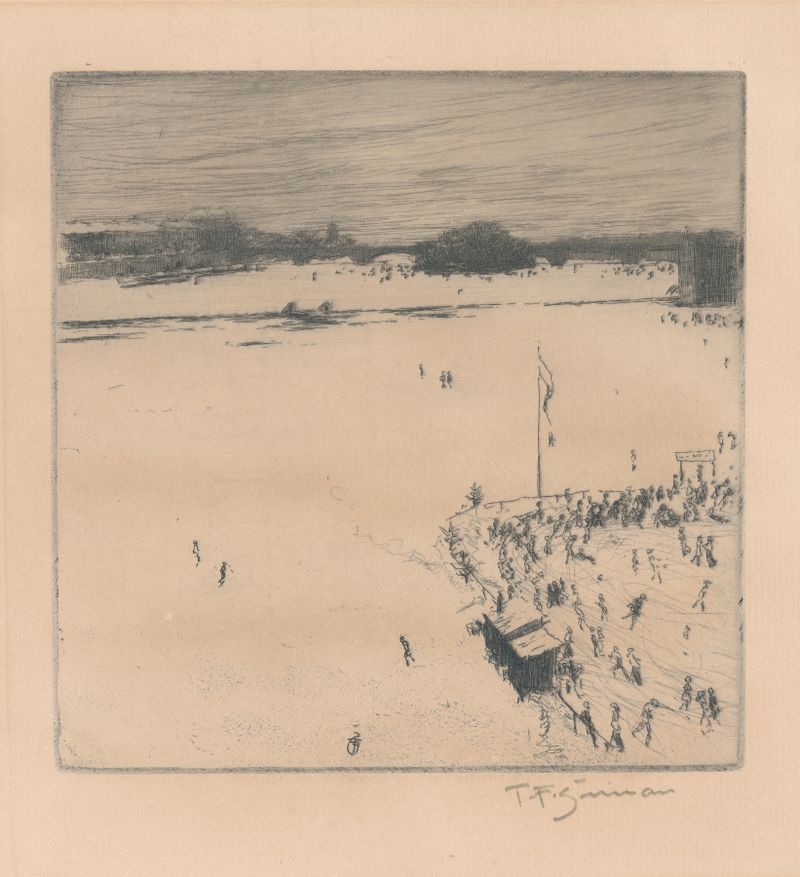
Klzisko pod Karlovým mostom
Tavík František Šimon

The Knights of the Cross Square with the Charles Bridge
Tavík František Šimon

The towers of the Hradčany
Tavík František Šimon

The entrance into the Týn Court
Tavík František Šimon
The Old Town City Hall with the Týn Cathedral
Tavík František Šimon





