A Pass In The Apennines — History & Facts
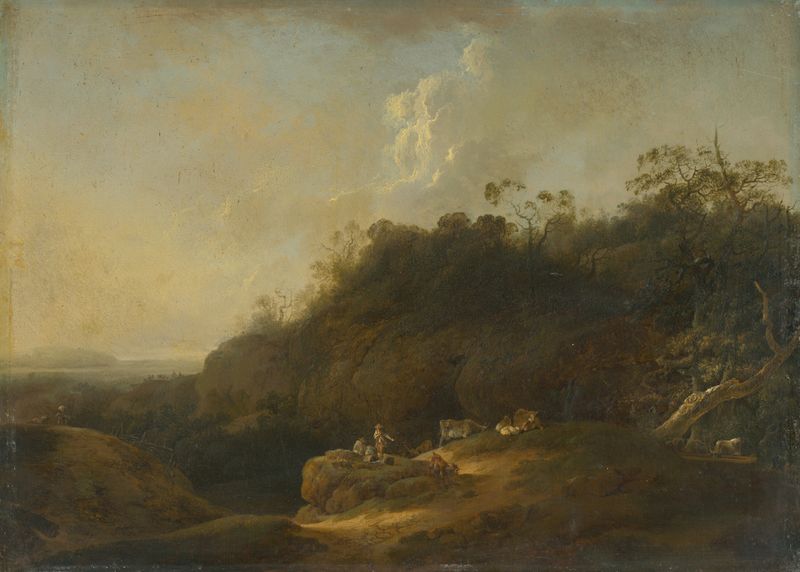
When did color learn to lie? The vibrant hues and soft textures in this piece challenge our perception of reality, inviting us to explore the delicate dance between truth and artifice. Look to the foreground, where a gentle stream meanders through the verdant landscape. Notice how the artist employs a palette of greens and browns, punctuated by bursts of flowered colors, drawing your eye to the intricate details of nature. The interplay of light and shadow creates a sense of movement; it feels as though the scene is alive, breathing with the whispers of the wind.
The distant mountains, cloaked in mist, seem to beckon with their enigmatic allure, suggesting a world beyond the canvas. As you delve deeper into the composition, consider the contrasts at play. The serene stream reflects not only the sky above but the myriad emotions that the landscape evokes—tranquility, longing, and perhaps a hint of melancholy. The distant figures, small against the vastness of nature, symbolize humanity's fragile existence within this grand tableau.
Each brushstroke offers insight into the emotional tension between the idyllic scene and the underlying truths of life. In the mid-17th century, Jan Wils created this artwork amidst a blossoming Dutch landscape painting tradition. Working between 1655 and 1660, he was influenced by the realism and attention to detail prevalent in the emerging Baroque style. This period marked a significant evolution in how artists depicted nature, blending observation with imagination to evoke both beauty and deeper meanings.