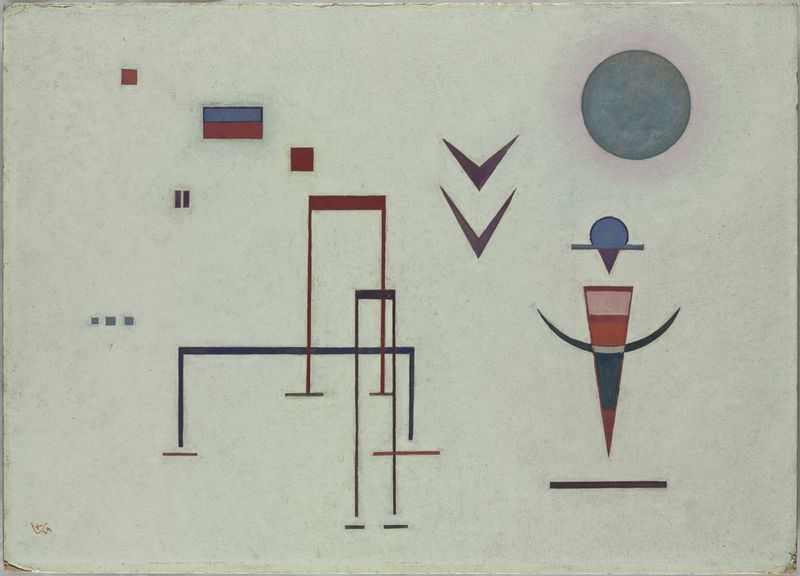
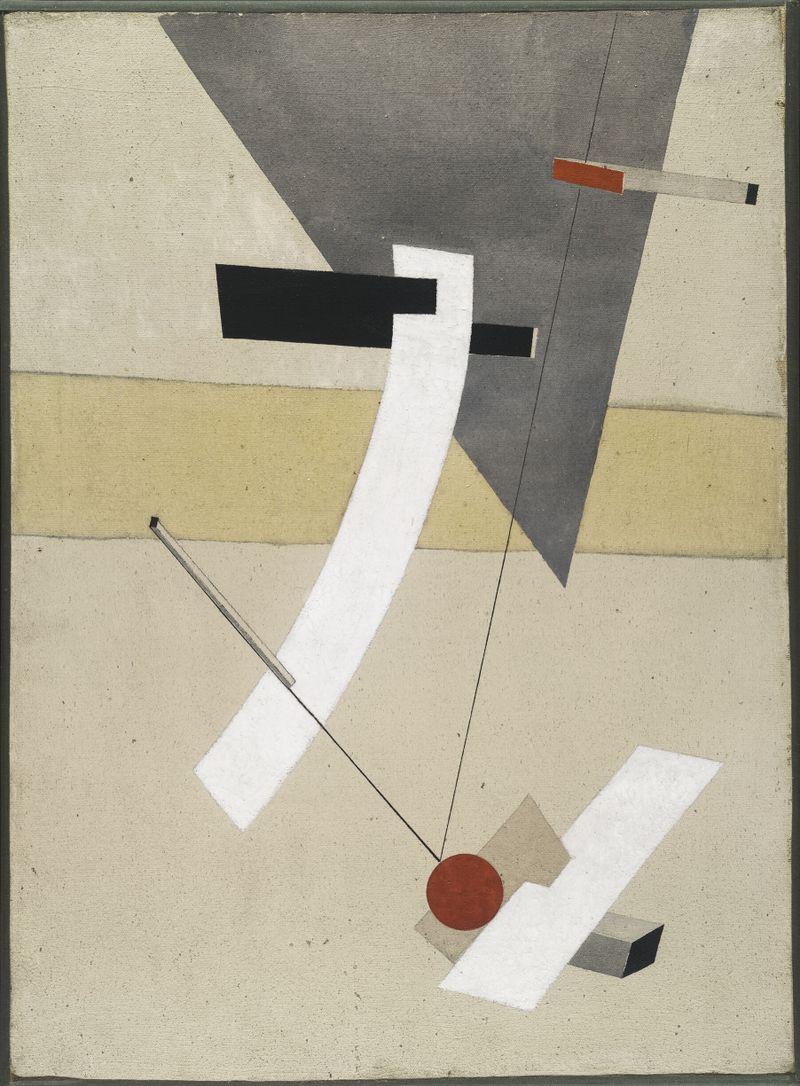
A red triangle pointing downwards, a blue triangle pointung upwards, and two floating rectangles — History & Facts
This poignant reflection embodies the delicate balance between life and mortality — a dance of shapes that beckons us to confront the impermanence of existence. Focus first on the striking red triangle, its pointed tip descending like an unyielding marker against an unadorned canvas, a bold assertion of gravity and fate. Now, look to the blue triangle, rising upward, a counterbalance that evokes hope and aspiration, suggesting a constant push against the inevitable. The two floating rectangles, suspended in this geometric dialogue, add a layer of ambiguity and stability, inviting contemplation about their relationship to the triangles.
The artist’s palette, a limited yet evocative choice, allows the shapes to vibrate with emotional tension, drawing the eye into a conversation about life’s contrasts. Within these shapes lies a profound commentary on the duality of existence. The downward-pointing triangle may symbolize the weight of mortality, while the upward triangle represents the human spirit’s resilience. The rectangles, perhaps, signify the structures we build around ourselves — both as sanctuaries and constraints.
Together, they create a visual narrative that invites viewers to reflect on the fragility of life and the interplay between despair and hope. David Humbert de Superville created this work during a period in the early 19th century when the world was undergoing significant changes, both socially and artistically. His exploration of geometry and color reflects the neoclassical movement's struggle to reconcile emotional depth with formal structure. Living in France, he was influenced by the shifting tides of romanticism, which sought to express the complexities of human experience, a theme that resonates vividly in this composition.