A River Landscape — History & Facts
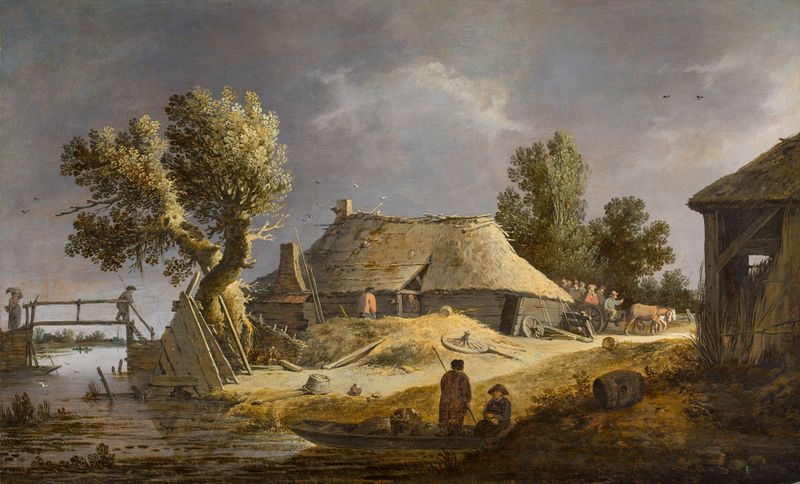
In the delicate interplay of hues, the fragility of existence manifests. Look to the center, where the river meanders gently, its surface reflecting a tapestry of twilight colors. The soft blues and warm golds bleed into one another, creating a serene gradient that draws the eye. Notice how the feathery strokes in the clouds above mimic the ripples below, suggesting a symbiotic relationship between sky and water.
The trees framing the scene are rendered with a gentle touch, their leaves whispering secrets in the tender light that filters through. Delve deeper into the subtle contrasts at play. The vibrant reflections in the river juxtapose with the muted earthiness of the riverbank, evoking a sense of balance between chaos and tranquility. The figures in the distance, mere silhouettes, suggest human presence yet evoke a sense of isolation, as if their lives are entwined with nature's fragile serenity.
This emotional tension invites contemplation about the relationship between humanity and the natural world. Pieter de Bloot painted this piece in 1698 during a period of burgeoning artistic exploration in the Netherlands. At the time, Baroque art was evolving, and de Bloot was influenced by the movement’s emphasis on emotional depth and naturalism. Working in a landscape tradition that celebrated the beauty of the Dutch countryside, he sought to capture the ephemeral qualities of light and atmosphere, reflecting the harmony and vulnerability of the world around him.