A river landscape with drovers and cattle — History & Facts
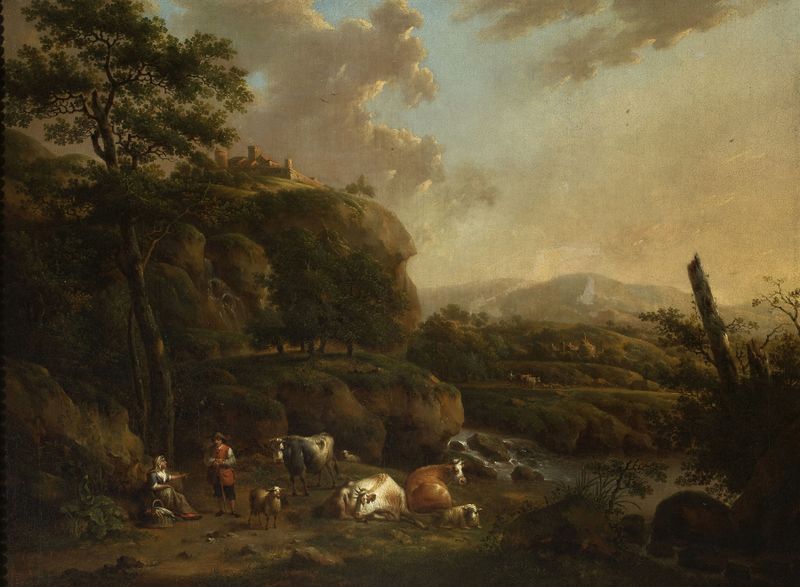
Could beauty survive in a century of chaos? In a time when the world was shifting beneath people's feet, a landscape unfolds—its serene banks a striking contrast to the turmoil of the era. Look to the foreground, where the gentle curve of the river invites the eye into a lush panorama. Here, figures of drovers guide their cattle across the water's edge, their toil captured in every brushstroke. Notice how the dappled sunlight filters through the trees, casting a soft glow on the grazing cattle, while the vibrant greens and blues create a sense of harmony amidst the pastoral scene.
The composition balances the workers with nature, suggesting a symbiotic relationship, yet hinting at the fragility of this slice of life. Delve deeper into the details, and you begin to sense the tension that bubbles beneath the surface. The drovers' labor symbolizes the struggle for survival against the backdrop of an increasingly industrializing world. The calm river, a metaphor for continuity, also speaks to the relentless passage of time, foreshadowing the encroachment of chaos.
The interplay of light and shadow not only adds depth to the scene but also hints at the dichotomy between hope and despair that pervaded the late 18th century. In 1790, when this painting was created, Henricus Josephus Antonissen was capturing a moment of tranquility amidst global upheaval. As revolutions and shifts in power swept across Europe, artists grappled with their legacy in depicting the world around them. Antonissen's work serves as a reminder of the beauty that can exist even when darkness looms, establishing a connection between the past and the future through the enduring allure of nature.