A Scene on the Váh River, Upper Hungary — History & Facts
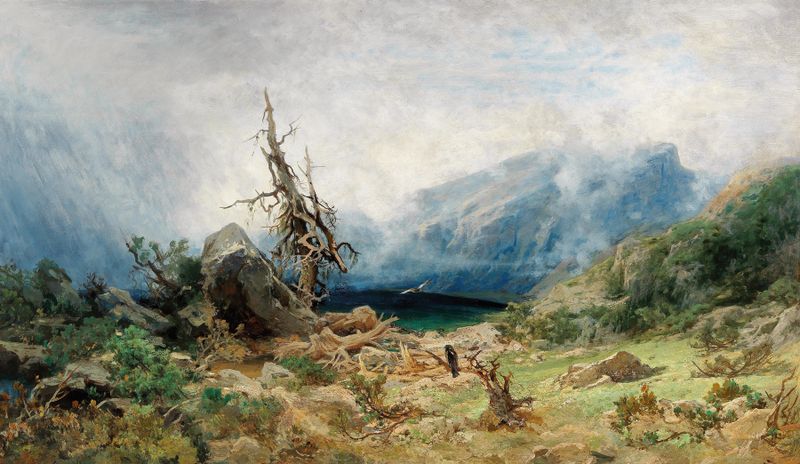
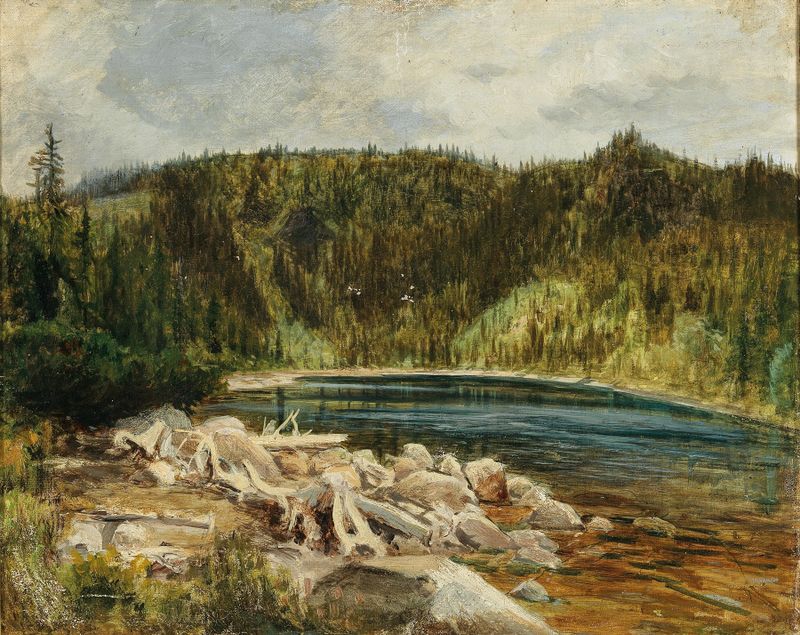
Who listens when art speaks of silence? In the stillness of A Scene on the Váh River, an unspoken dialogue unfolds between nature and the observer, echoing an obsession with tranquility. Look closely at the serene waters, where the reflection of towering trees dances lightly against the surface. Notice how the palette of soft greens and browns serves as a gentle embrace around the canvas, drawing the eye toward the central figures, who seem both at home and apart from their surroundings. The brushstrokes create a delicate interplay of light and water, revealing the artist's meticulous attention to detail.
Each element is carefully placed, inviting the viewer to wander deeper into the scene. Yet, beneath this calm exterior lies an emotional tension. The figures, seemingly engaged in peaceful contemplation, hint at an unexpressed longing for connection with nature or, perhaps, each other. The expansive sky draws the eye upwards, suggesting aspirations beyond the earthly realm, while the ripples in the water symbolize the undercurrents of thought that swirl just below the surface.
This careful balance speaks to the obsession with finding meaning in solitude, even amidst the beauty of nature. In 1865, while residing in Prague, Mařák created this work during a period when Romanticism still influenced the art world, yet the seeds of Impressionism were beginning to take root. His focus on landscapes, imbued with emotional depth and a fascination for nature’s subtleties, marked him as a pivotal figure in the transition toward modernity in Czech painting.