A Snowy Path in the Forest — History & Facts
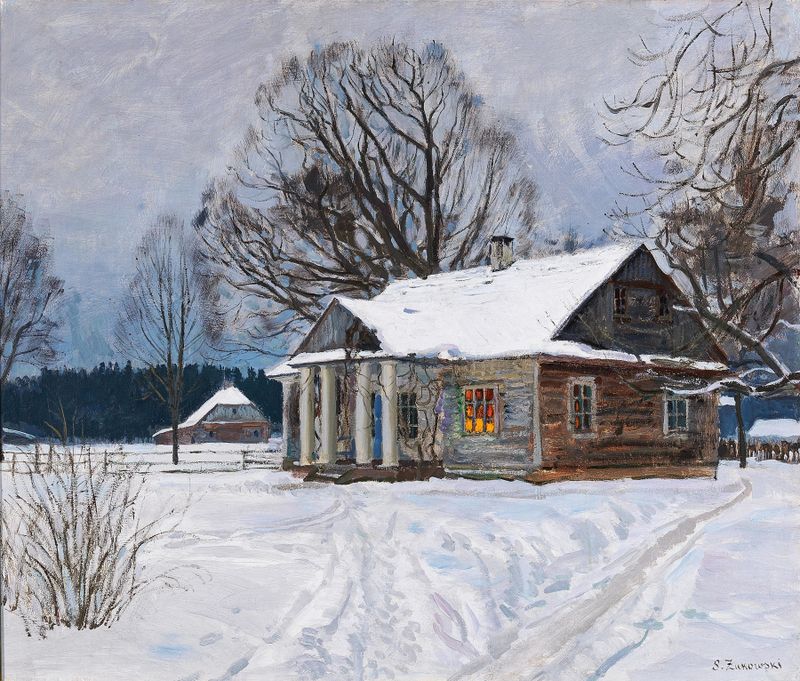
Can paint confess what words never could? In A Snowy Path in the Forest, movement is captured in a stillness that beckons viewers to wander through its serene landscape. Look closely at the soft brushstrokes that create the snow-laden path winding through the forest. Notice how the light filters through the branches, casting delicate shadows upon the ground. The muted blues and whites evoke a sense of tranquility, while splashes of earthy browns ground the scene, inviting the viewer to step into the canvas and experience the chill of the winter air. Yet beneath this placid surface lies a tension between solitude and connection.
The winding path suggests a journey, leading us deeper into the woods, while the surrounding trees stand sentinel, both inviting and confining. Each flake of snow, meticulously rendered, hints at fleeting moments—transitory yet infinite. The beauty of the ever-falling snow captures the essence of time itself, encouraging reflection on the paths we choose and those left unexplored. Stanislav Yulianovich Zhukovsky painted this piece in 1928 during a period marked by exploration and change in the art world.
Emerging from a post-revolutionary Russia, he found inspiration in the natural landscapes around him, blending realism with an emotional depth that mirrored his own experiences and those of his contemporaries. As a dedicated artist, Zhukovsky sought to encapsulate not just the beauty of nature, but the profound feelings it evokes in each observer.