A Sussex lane — History & Facts
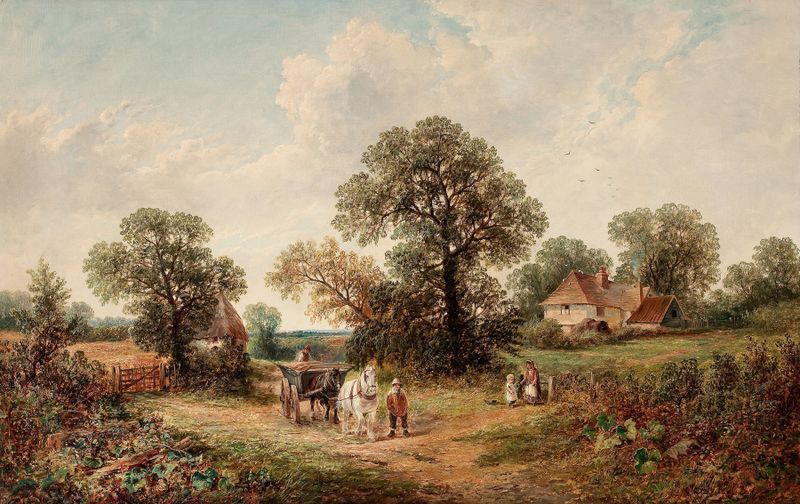
Could beauty survive in a century of chaos? In A Sussex Lane, the answer emerges through the gentle embrace of nature, whispered secrets of mortality hidden in the idyllic landscape. Look to the left at the soft undulations of the verdant hills, which cradle the sun-dappled lane meandering softly through the scene. Meadow's masterful use of light creates a shimmering effect, inviting the eye to follow the road's path towards an alluring horizon. The delicate brushstrokes breathe life into the foliage, while the warm, earthy palette captures the ephemeral essence of a fleeting moment.
Each element, from the rustic fence to the winding path, invites contemplation, whispering stories of lives once lived and lost. Yet, beneath the tranquil surface lies a profound sense of impermanence. Notice the wilting wildflowers flanking the lane, a quiet reminder of nature’s cycles, suggesting both beauty and decay. The juxtaposition of the sunlit road against the shadowy, encroaching trees evokes the tension between life’s vibrancy and the inevitability of time.
This duality resonates deeply, underscoring a universal truth about existence—a serene beauty often coexists with the specter of mortality. In 1875, Meadows was immersed in the artistic revival of naturalism, painting in the picturesque landscapes of southern England. As industrialization transformed the world, he captured the serenity of rural life, reflecting a longing for simpler times amidst modern chaos. This painting stands as a testament to his ability to encapsulate beauty within a world brimming with change, inviting viewers to pause and appreciate the fleeting moments of life.