A vast landscape, in the background a village — History & Facts
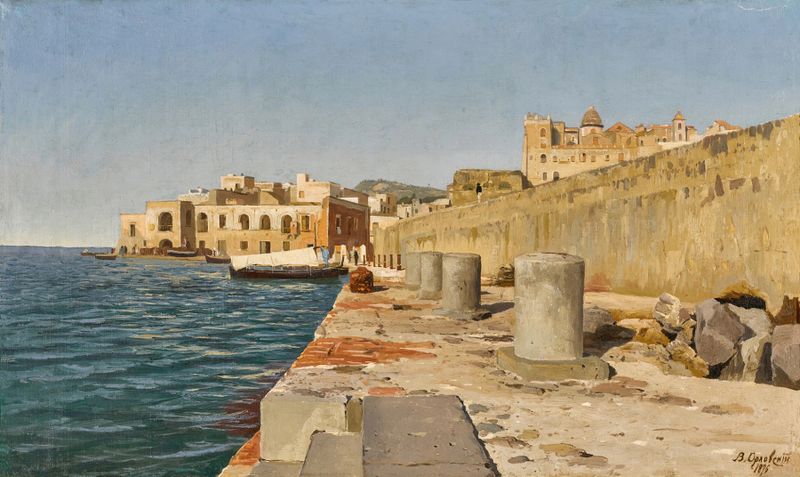
Can beauty exist without sorrow? In A Vast Landscape, the question lingers like a gentle breeze, coaxing the viewer to ponder the interplay of hope and melancholy. Look to the horizon, where soft, rolling hills cradle a cluster of quaint cottages, their thatched roofs barely visible against the expansive sky. Notice how the verdant greens of the foreground sing under the caress of sunlight, coaxing your gaze upward to the delicate wisps of clouds that playfully dance across the azure canvas. The artist’s deft brushstrokes create a tapestry of texture, inviting you to lose yourself in the serenity of this pastoral scene. Yet, beneath the tranquil surface, a subtle tension simmers.
The village, distant and insular, evokes a sense of isolation despite the inviting landscape. The interplay of light and shadow casts a poignant reminder of life’s transitory nature — the beauty of the land juxtaposed against the potential struggles of its inhabitants. This duality invites a deeper reflection on the human experience, where hope mingles with underlying sorrows, forming the essence of existence. In 1879, when this piece was painted, Orlovsky was navigating a transformative period in his artistic journey.
Living in Russia amidst a cultural awakening, he sought to capture the emotional resonance of landscapes that conveyed both solace and longing. As the arts flourished, he infused his work with an exploration of nature’s beauty, inviting viewers to find their own narratives in the vastness he portrayed.