A View of Locarno from the Naviglio Grande — History & Facts
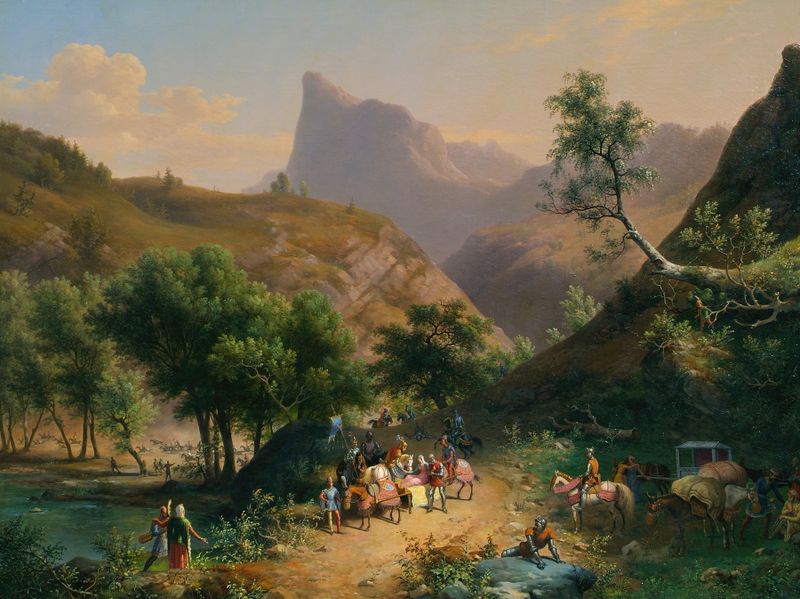
In the realm of beauty, some landscapes sing louder than others, inviting us into their embrace with open arms. This painting captures not just a view, but an experience, a visceral connection to a world where nature and architecture blend seamlessly, evoking timeless allure. Look to the left where the gentle curve of the Naviglio Grande leads the eye toward the lush hills of Locarno, embraced by wisps of soft clouds. Notice how the delicate hues of green and blue dance harmoniously beneath the warm golden light, while the intricate details of the architecture reflect the artist’s meticulous technique.
The composition flows naturally, guiding the viewer into the serene landscape, each brushstroke contributing to a rhythmic pulse of life. Yet, beneath this tranquil surface lies an exploration of contrasts—the stillness of the water versus the dynamic life of the town. The warmth of the sunlight juxtaposes the cooler tones of shadow, hinting at the interplay of serenity and vibrancy. A lone figure in the foreground, perhaps lost in contemplation, invites us to ponder our own place within this beauty, leading to a sense of longing for connection that transcends time. Created around 1830, this work emerged during a period of profound change in Italian art, when Romanticism was beginning to influence landscapes with emotional depth.
Bisi, who spent much of his career in Milan, was deeply engaged with the surrounding natural beauty, reflecting both personal experiences and the cultural shift towards greater appreciation for the sublime in nature. This painting stands as a testament to his artistic journey, resonating with the collective heartbeat of a world in transition.