A View of London from Blackfriars Bridge — History & Facts
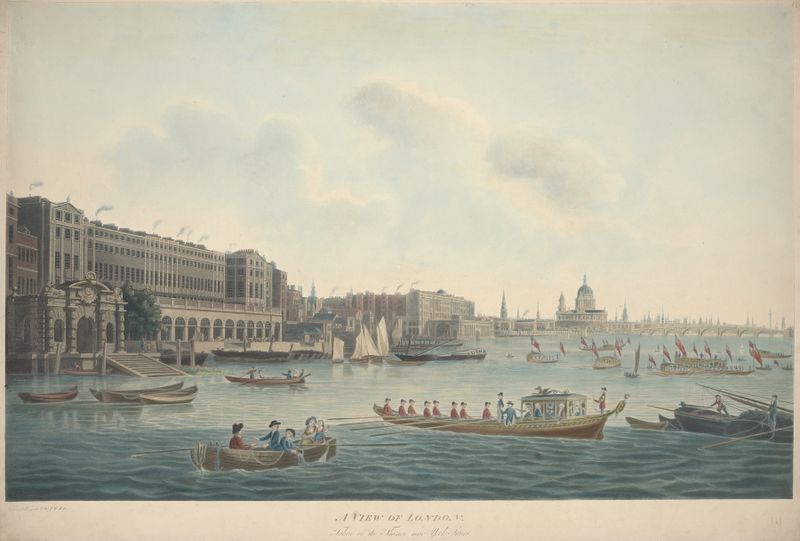
What secret hides in the quiet of the canvas? Beneath the serene surface of A View of London from Blackfriars Bridge, there lingers an unsettling tension that evokes the unvoiced fears of a city on the brink of change. Look to the horizon where the Thames winds through the city, its gentle ripples contrasting with the imposing silhouette of buildings looming against a fading sky. The soft pastels of dusk wash over the scene, illuminating the delicate architecture while casting long shadows that seem to whisper of history and uncertainty. Notice how the figures on the bridge, small and indistinct, are caught in their own worlds, oblivious to the looming presence of the Thames, a silent but powerful force that binds them to the city’s pulse. Embedded in the composition are layers of meaning.
The tranquil waters reflect not merely the cityscape but also the underlying currents of societal shifts — the Industrial Revolution was beginning to reshape urban life, bringing both promise and fear. The bridge, a symbol of connection, also serves as a threshold between the familiar and the unknown, urging viewers to consider what lies beyond the horizon. Edye’s choice of muted colors enhances the sense of foreboding, suggesting that the tranquility is but a fleeting moment before the storm of progress. In 1795, John William Edye was immersed in the vibrant yet tumultuous world of London, a city grappling with rapid modernization and social upheaval.
This painting emerged during a period when artists were increasingly drawn to capturing the essence of urban life, employing innovative techniques to convey both the beauty and anxiety of their surroundings. It was a pivotal time in art history, as the romantic lens began to replace the more traditional depictions of cityscapes, challenging viewers to ponder the deeper implications of their existence within a changing world.