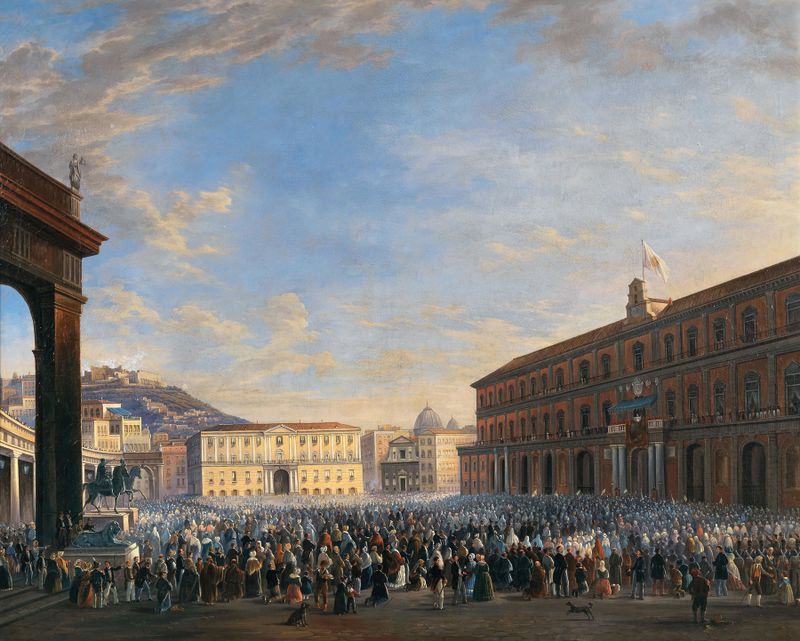
A View of Naples from Posillipo — History & Facts
Who listens when art speaks of silence? In a world often overrun by chatter, some landscapes beckon us to pause and reflect on the quiet whispers of decay and beauty intertwined. Look to the horizon, where the sun melts into a serene sea, bathing the scene in golden hues. Notice how the gentle slopes of Posillipo cradle the city of Naples, each building standing sentinel against time's unrelenting march. The delicate brushwork reveals the interplay of light and shadow, while soft clouds drift lazily above, inviting contemplation.
Your gaze is drawn to the foreground where a solitary figure, perhaps a fleeting memory, observes the vista, embodying the stillness of the moment. Yet, beneath this picturesque surface lies a tension between life and decay. The dilapidated structures hint at the passage of time, each crack and crumbling wall a testament to history's embrace. The vibrant colors of the landscape contrast sharply with the muted tones of neglect, suggesting an underlying melancholy.
This duality reflects not only the transient nature of beauty but also the resilience of the human spirit in the face of change. Created in c. 1840, during a period of artistic exploration in Italy, the work captures Salvatore Fergola at a pivotal point in his career. He painted this piece while navigating the romantic ideals of landscape painting, influenced by the burgeoning appreciation for natural beauty and the complexities of urban life.
As the world around him shifted, his art served as both a celebration and a reminder of the layers of existence that define a place and its people.