A View of Salzburg from the Kapuzinerberg — History & Facts
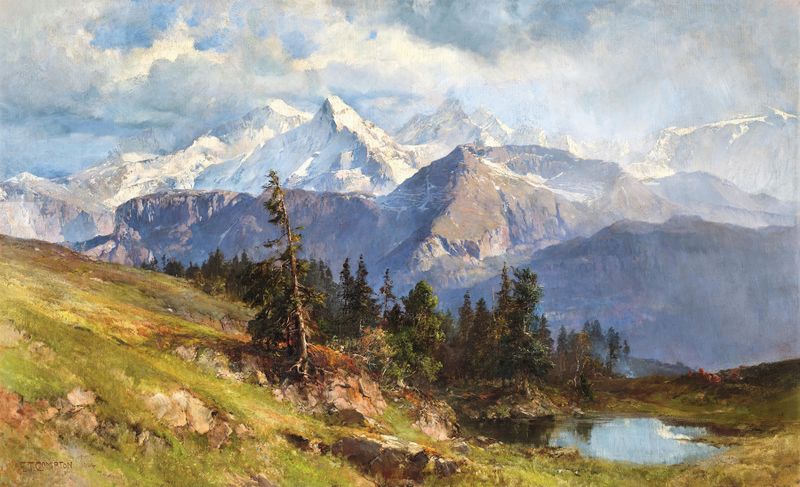
In moments of stillness, the heart beats louder, echoing the ecstasy hidden within the quiet embrace of nature. Look to the bottom center where the lush greenery of the Kapuzinerberg rises, drawing your eye toward the city below. The palette is vibrant, a fusion of greens and browns embroidered with the warm hues of distant rooftops, merging earth and sky. Shadows dance across the undulating landscape, skillfully rendered with strokes that reflect the artist's bond with the natural world.
The crisp peaks of the Alps loom beyond, their presence commanding yet serene, inviting contemplation. Yet, it is in the small details that deeper truths emerge. Notice how the winding paths playfully curl through the landscape, suggesting the passage of time and movement. There’s a juxtaposition between the vibrant life of the city and the stillness of the mountains, an interplay that speaks to the harmony of human existence within the grandeur of nature.
The contrast of the bright sky against the muted earth tones elicits a sense of yearning, capturing both the joy and sorrow of fleeting moments. During the time this piece was created, Edward Theodor Compton was working in the late 19th to early 20th century, a period marked by a Romantic revival in landscape painting. His residence in Europe, alongside many artists exploring plein air techniques, reflected a growing appreciation for capturing nature's raw beauty. As industrialization loomed, this work stands as a testament to a longing for connection with the organic, echoing the sentiments of an era in transition.