
A view of Santa Catalina, Seville, Spain — History & Facts
Can paint confess what words never could? In the delicate interplay of brushstrokes and pigments, the weight of existence hangs palpably in the air, whispering the stories of those who once walked beneath its shadows. Focus on the majestic Santa Catalina, where the architecture rises, intricate and defiant against time. Look closely at the warm terracotta hues that embrace the buildings, catching the sunlight with a gentle glow, as the sky unfurls in a gradient of soft blues and whites. Notice the subtle play of light and shadow, which creates a dance upon the stone walls, inviting the viewer to ponder both the beauty and impermanence of this historical site.
The composition captures not just a place, but an essence, inviting contemplation of what lies beyond the façade of daily life. Yet, beyond the stunning visuals lies a deeper conversation about mortality and legacy. The splendor of the edifice speaks to the triumphs of human endeavor, while the stillness of the scene reflects the quiet passage of time, evoking feelings of nostalgia and transience. The juxtaposition of the vibrant life surrounding the building and the silent stoicism of the structure itself encapsulates a poignant tension, urging the viewer to reflect on their own fleeting moments. David Roberts painted this view in 1833 during a period of intense artistic exploration and travel.
Having journeyed through Spain amid a wave of Romanticism, he meticulously documented the landscapes and architecture that captivated him. At that time, he sought to elevate the genre of landscape painting, transforming it into a vessel for emotional expression and historic reverence, ultimately reshaping how future generations would perceive their cultural heritage.
More Artworks by David Roberts
Browse all →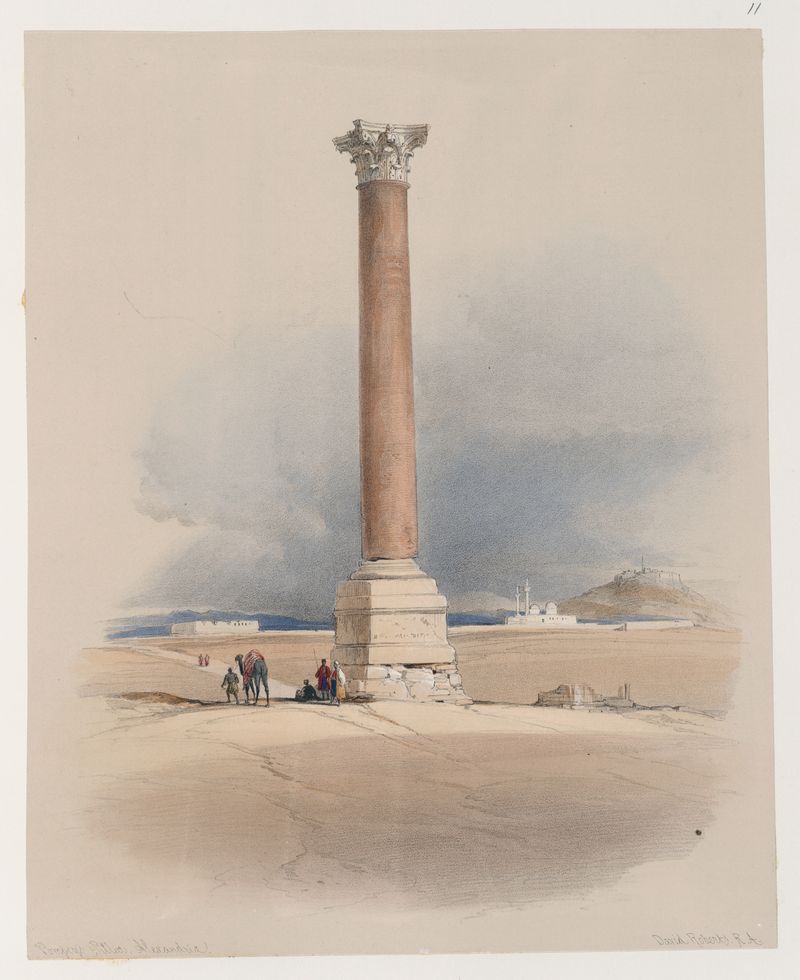
Pompey’s Pillar, Alexandria.
David Roberts

Approach to the Fortress of Ibrim.
David Roberts

Karnac [Karnak]. Nov. 29th, 1838.
David Roberts
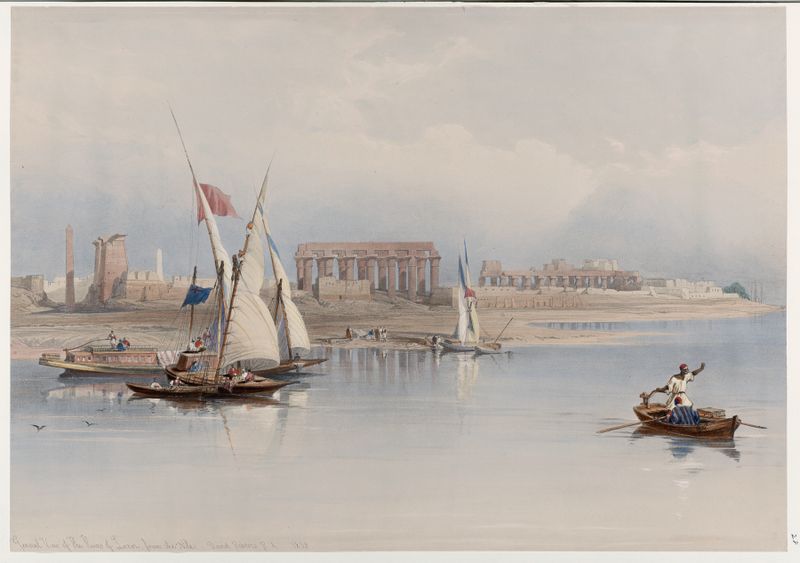
General view of the ruins of Luxor, from the Nile. 1838.
David Roberts

Statues of Memnon at Thebes, during the inundation.
David Roberts

Entrance to the tombs of the kings of Thebes. Bab-el-Malouk [Bîbân al-Mulûk].
David Roberts

The Fortress of the Alhambra, Granada
David Roberts
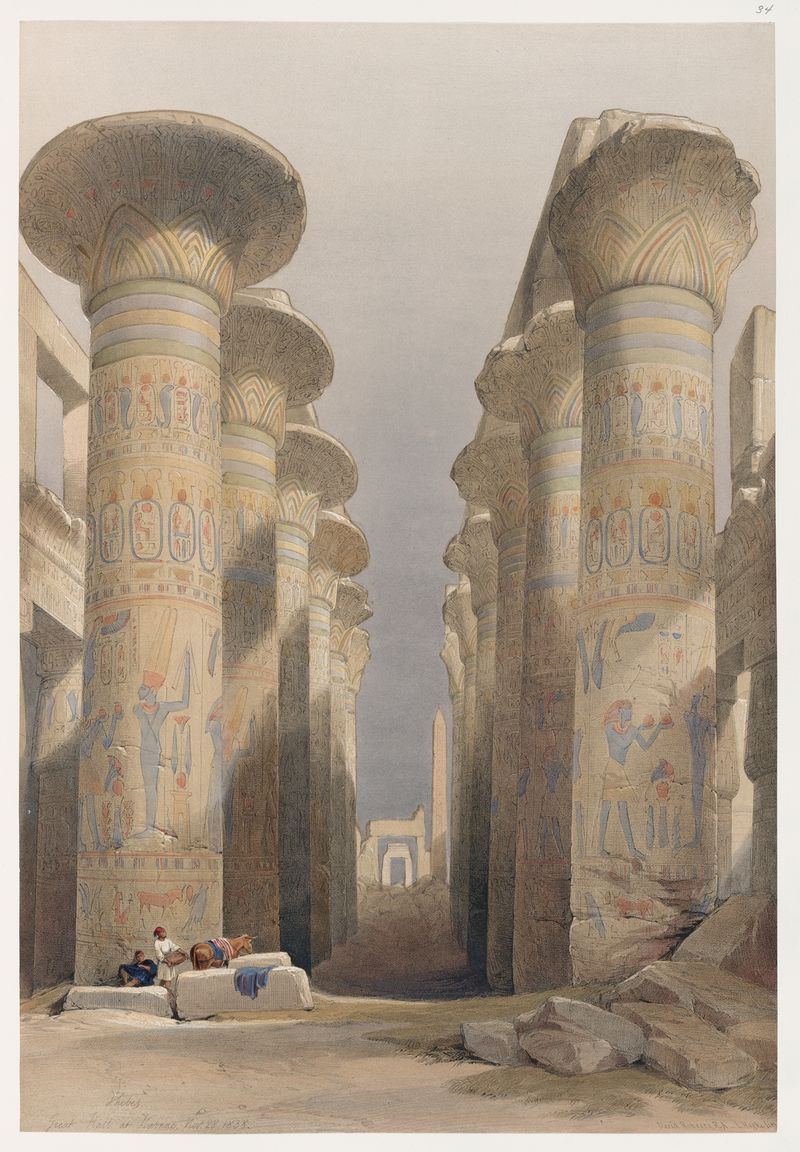
Thebes. Great Hall at Karnak. Nov. 28, 1838.
David Roberts
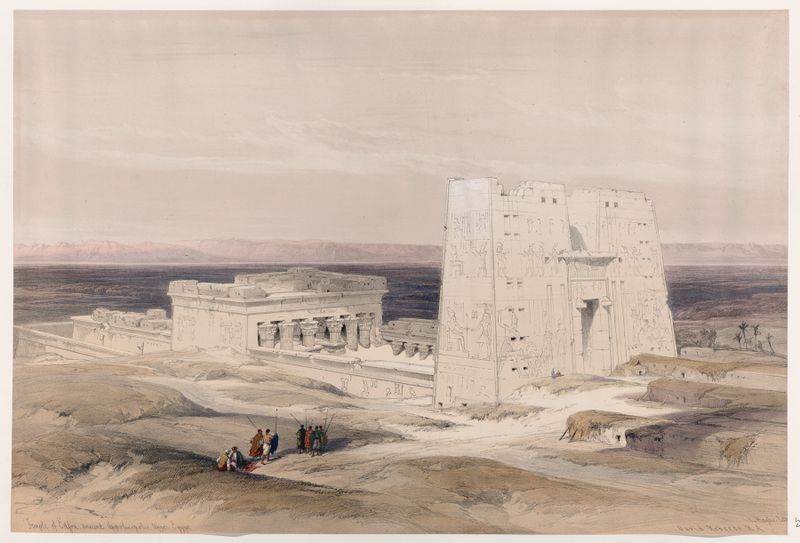
Temple of Edfou [Idfû], ancient Appolinopolis, Upper Egypt.
David Roberts

Temple of Kalabshee [Kalabsha, Kalâbishah], Nubia. Nov. 1838.
David Roberts
More Architecture Art
Browse all →
The statue of Liberty
Frédéric Auguste Bartholdi

View of Houses in Delft, Known as ‘The Little Street’
Johannes Vermeer

View of Houses in Delft, Known as ‘The Little Street’
Johannes Vermeer

The Cathedral in Rouen. The portal, Grey Weather
Claude Monet

The yellow house
Vincent van Gogh

The Church in Auvers-sur-Oise, View from the Chevet
Vincent van Gogh