
A View of the Danube Valley with the Greifenstein Ruins — History & Facts
Is this a mirror — or a memory? In A View of the Danube Valley with the Greifenstein Ruins, the landscape becomes a haunting reflection of both nature and history, inviting contemplation on what we preserve and what we lose. Focus on the graceful curves of the Danube, where the river winds like a soft ribbon through the valley, capturing the viewer’s gaze with its inviting flow. Notice how the light dances upon the water’s surface, illuminating the ruins of Greifenstein that rise majestically in the background. The warm hues of ochre and gold contrast with the deep greens of the surrounding foliage, creating a harmonious balance that suggests the passage of time and the decline of empires. The artist subtly intertwines themes of nostalgia and resilience.
The crumbling ruins symbolize lost grandeur, a testament to the transience of human endeavors. Meanwhile, the vibrant landscape thrives around it, suggesting that nature endures and adapts even as civilizations crumble. This contrast evokes an emotional tension between the past and the present, urging viewers to reflect on their own connections to history and heritage. In 1838, Wilhelm Steinfeld painted this work amidst a backdrop of political upheaval in Europe, where revolutions stirred aspirations for change.
Living in a time of both artistic exploration and social reawakening, he sought to capture the beauty of a land steeped in narrative, resonating with the evolving identity of his contemporaries while leaving a timeless legacy of his own.
More Artworks by Wilhelm Steinfeld
Browse all →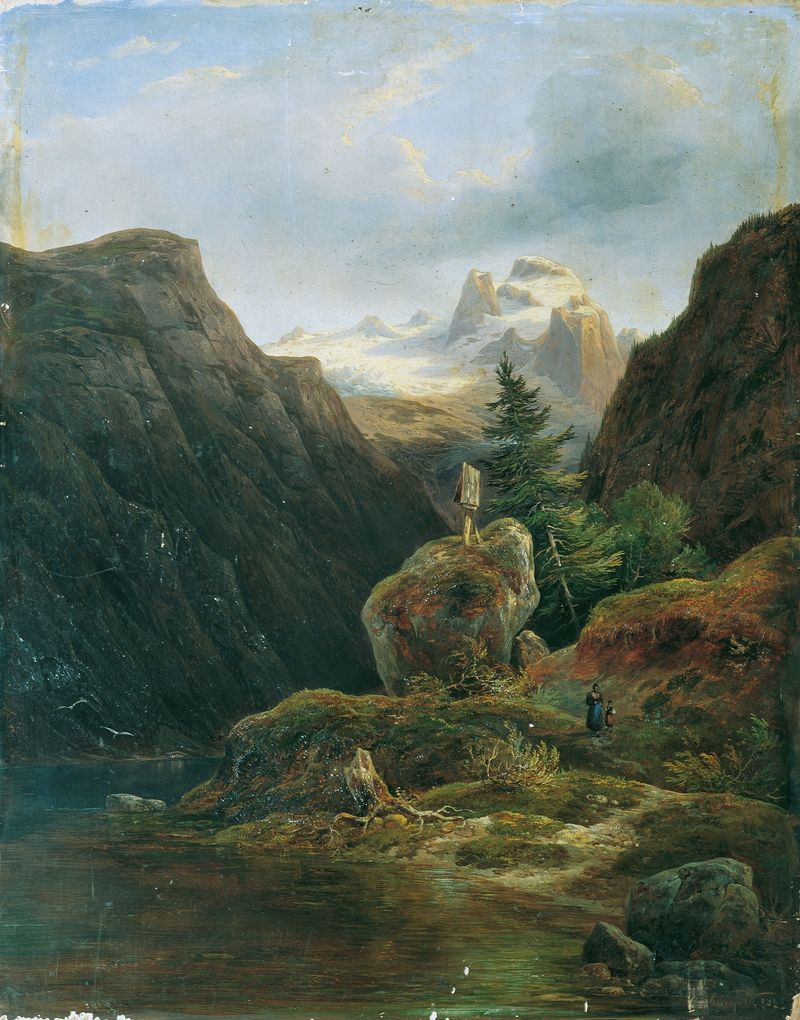
Vorderer Gosausee gegen Dachstein
Wilhelm Steinfeld

Gebirgssee
Wilhelm Steinfeld

Weite Landschaft im Salzkammergut
Wilhelm Steinfeld

A View of Tyrol
Wilhelm Steinfeld
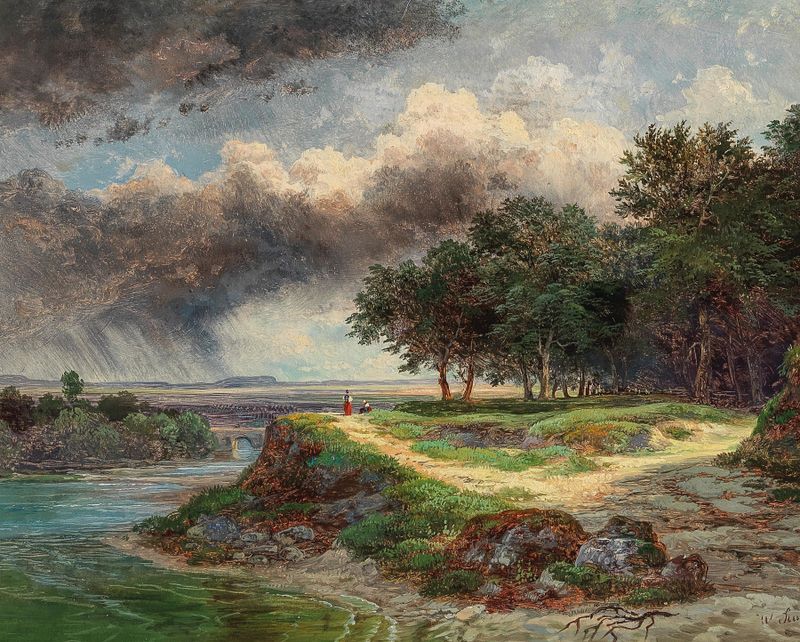
A Vast River Landscape on a Rainy Day
Wilhelm Steinfeld
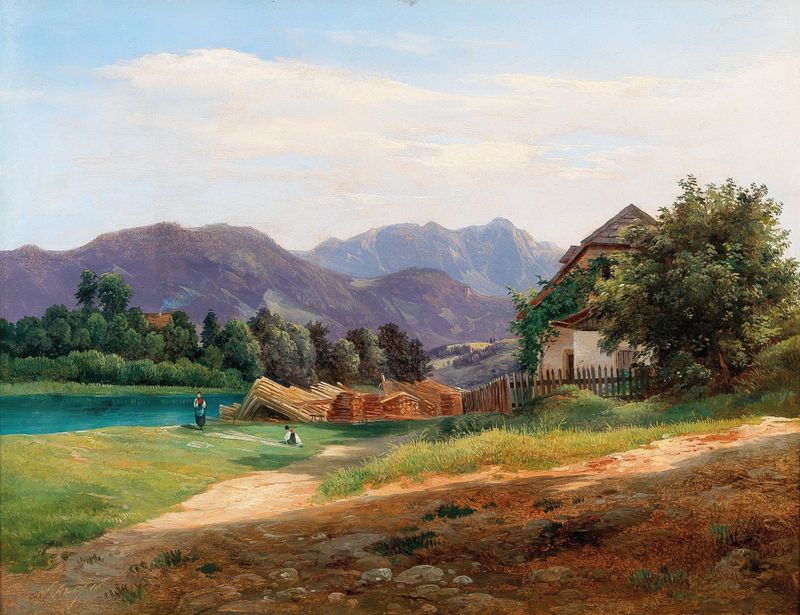
Landscape with Stored Timber
Wilhelm Steinfeld
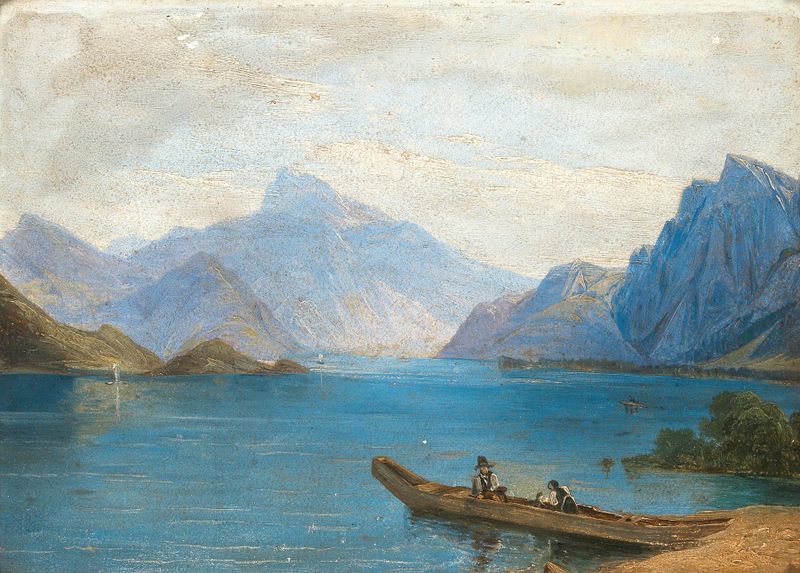
Am Attersee
Wilhelm Steinfeld
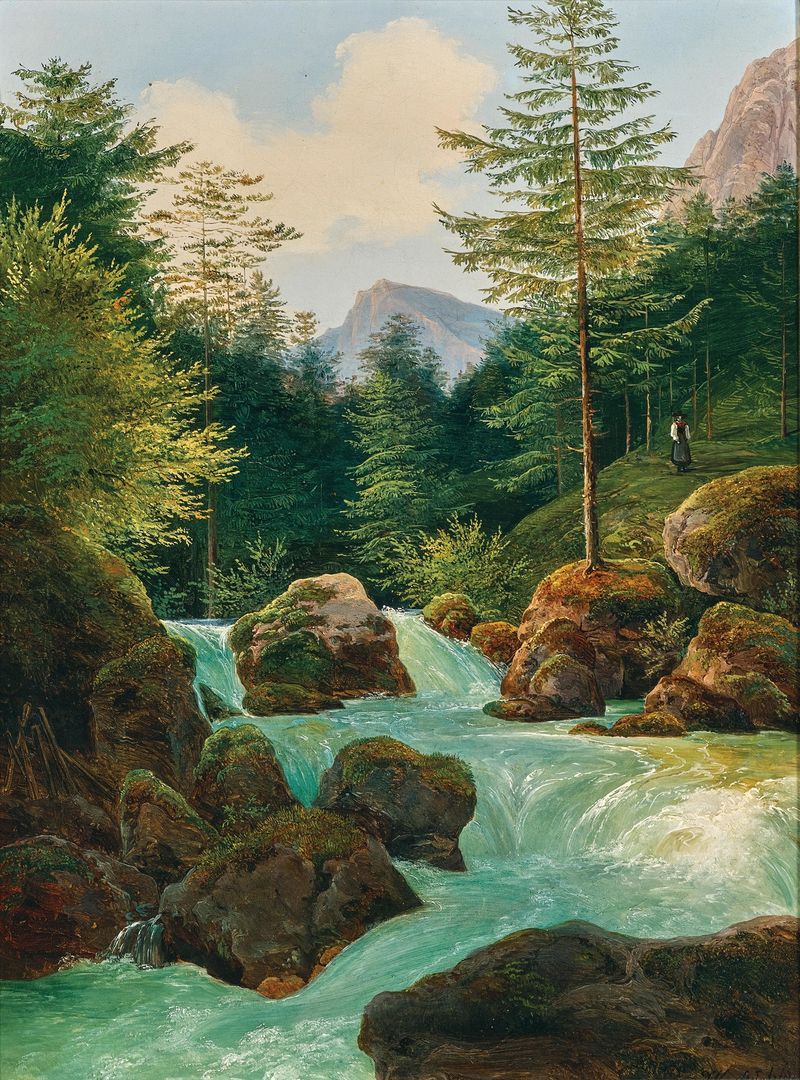
Mühlsturzhorn in Baiern
Wilhelm Steinfeld
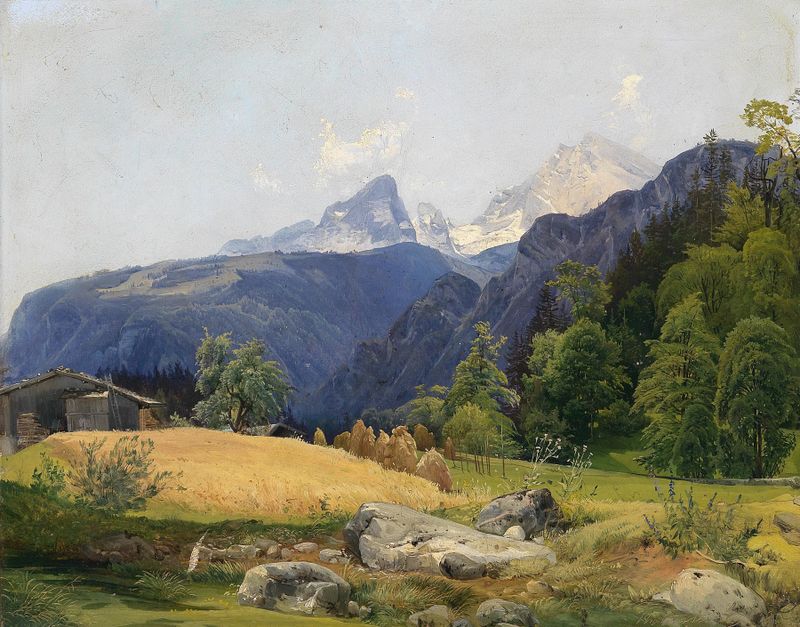
Motiv aus Unterstein
Wilhelm Steinfeld





