A Well In Jaffa — History & Facts
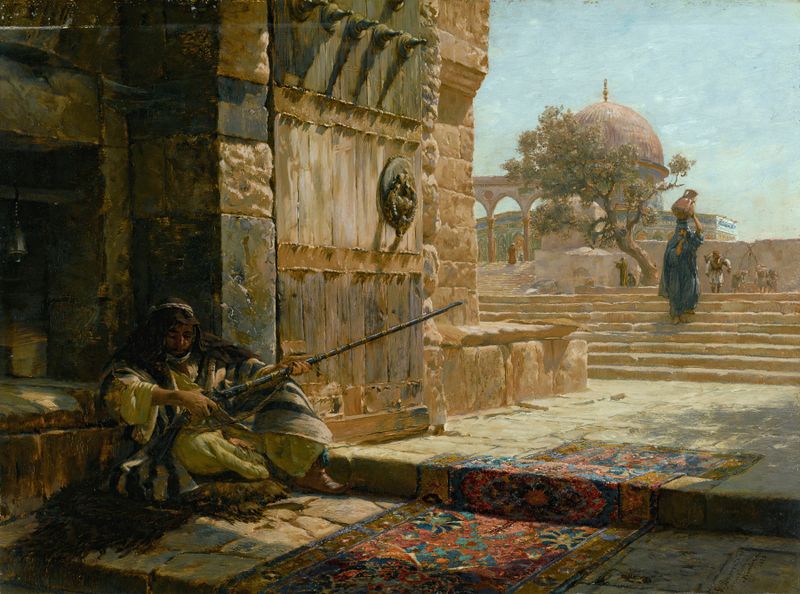
Could beauty survive in a century of chaos? This haunting question lingers, echoing through time and space, much like the faded echoes of the well itself. Look to the left at the intricate stones, each one weathered yet steadfast, telling stories of the countless hands that have touched them. The subdued palette—earthy browns and muted greens—evokes a sense of decay, as sunlight delicately filters through the branches above, casting dappled shadows that dance on the well's surface. The interplay of light and shade highlights the textures of the surroundings, drawing the viewer's eye toward the tranquil center, where water lies still, a precious resource amidst the relentless march of time. Within this serene landscape lies a profound tension between permanence and transience.
The well, a symbol of sustenance, is juxtaposed against the encroaching decay of its surroundings, suggesting both the resilience and fragility of life. Eerie silence permeates the scene, inviting contemplation on the passage of time and humanity’s inherent struggles against the inevitable decline. The well stands not just as a functional object, but as a poignant reminder of what once was, urging us to reflect on our own fleeting existence. Created in 1880, this piece was born from the experiences of a time when Gustav Bauernfeind was deeply engaged with the changing landscapes of the Middle East.
Having traveled extensively, he sought to capture the essence of the places he visited, particularly in the wake of political upheaval and cultural transition. This painting reflects his fascination with the historical depth of Jaffa and the tensions of a world on the brink, encapsulating both the beauty and the decay that coexist in the fabric of life.