A Winter Landscape With Woodgatherers On The Ice — History & Facts
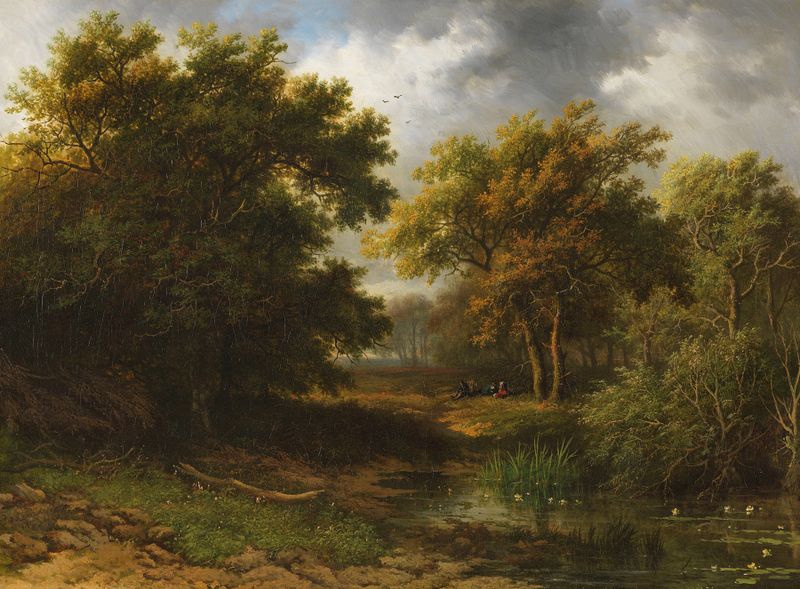
In legacies, we often find the profound tales of existence etched in the quiet whispers of nature and humanity. Focus on the soft palette that envelops the canvas; muted whites and grays dominate the landscape, evoking the chill of the wintry scene. Look to the center where figures are skillfully rendered, their gestures animated as they gather wood from the ice. The delicate play of light captures the glistening frost, creating an ethereal backdrop that contrasts with the earthy tones of their garments.
This balance between cold and warmth beckons the viewer to meditate on their struggle against the elements. Notice the subtle interplay of isolation and companionship—how the woodgatherers move together yet seem absorbed in their individual tasks. This duality reflects humanity’s connection to nature, suggesting that even amidst harsh conditions, there is a shared purpose that binds people to one another and to the land. The ice, both a barrier and a source, symbolizes the challenges that shape lives and legacies, inviting contemplation on survival and resilience. Willem Bodeman created this painting during a period in the 19th century when winter landscapes became a significant subject in art, reflecting the Romantic era's fascination with nature’s beauty and severity.
Bodeman, active in the Netherlands, sought to capture the harmony between man and his environment during a time of rapid industrial change, making this piece a poignant reminder of simpler, yet profound moments in human history.