A wooded landscape with travellers on a sandy path — History & Facts
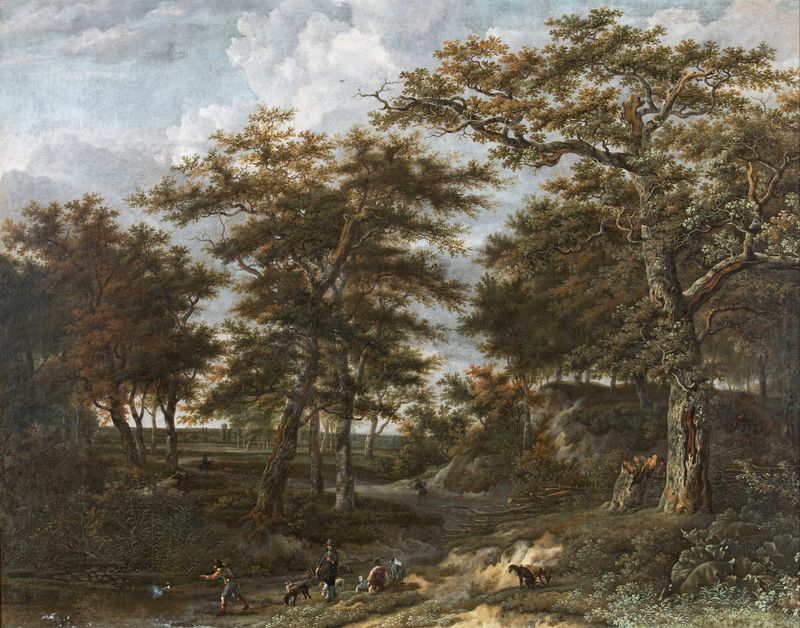
Who listens when art speaks of silence? In the stillness of a wooded landscape, divinity unveils itself through nature's embrace, inviting both reflection and reverence. Look to the foreground, where the sandy path winds gently through the underbrush, inviting travelers into a verdant expanse. Notice how the light dapples through the leaves overhead, casting a mosaic of shadows that mingles with the earthy tones of the soil. The muted greens and browns set a harmonious tone, while the subtle play of light creates a sense of depth and dimension, leading the eye toward the figures in the distance. Within this serene scene, a delicate tension emerges between the travelers' journey and the vast, quiet wilderness that surrounds them.
Each figure, rendered with careful detail, speaks to the human spirit's quest for connection within a greater whole. The juxtaposition of their transient presence against the timelessness of nature raises questions about our fleeting existences in comparison to the eternal beauty of the landscape. In the 1660s, Verboom painted this scene during a time when Dutch art was flourishing, marked by a deep interest in landscape and naturalism. Living in the Netherlands, he engaged with the burgeoning genre of landscape painting, capturing the essence of the land with an eye for detail and an appreciation for the divine qualities of the natural world.
This period saw artists striving to evoke emotional responses through serene vistas, as Verboom masterfully illustrates in this tranquil moment.