
Aarelandschaft — History & Facts
What if silence could speak through light? In Aarelandschaft, the delicate interplay of shadow and illumination beckons the viewer into a world where the fragility of nature is momentarily frozen in time. Look to the left at the soft contours of the distant hills, their muted greens and browns whispering of tranquility. As your gaze drifts downward, the gentle flow of the river reflects the sky’s subtle hues, creating an ethereal mirror that seems to hold the breath of the landscape. Biedermann's use of light is masterful; it dances across the canvas, casting a serene stillness that envelops the viewer, evoking a sense of calm yet suggesting an underlying vulnerability in the natural world. In this painted moment, contrasts abound—the robust solidity of the land juxtaposed with the ephemeral nature of water.
The fragile ripples on the river's surface signify life’s transience, while the sturdy trees on the banks stand as guardians of that fleeting beauty. This juxtaposition speaks to the inevitability of change, as the landscape remains a witness to the passage of time, reminding us of the delicate balance between permanence and impermanence. Created during a time of increasing industrialization in the late 19th century, Biedermann's work reflects a yearning for connection to the purity of nature amidst a rapidly transforming world. Residing in Switzerland, he found inspiration in the Aare River, embodying both the serenity of the countryside and the tension felt by many as nature faced encroachment.
His commitment to capturing these landscapes demonstrates a profound appreciation for the fragile beauty of the environment around him.
More Artworks by Johann Jakob Biedermann
Browse all →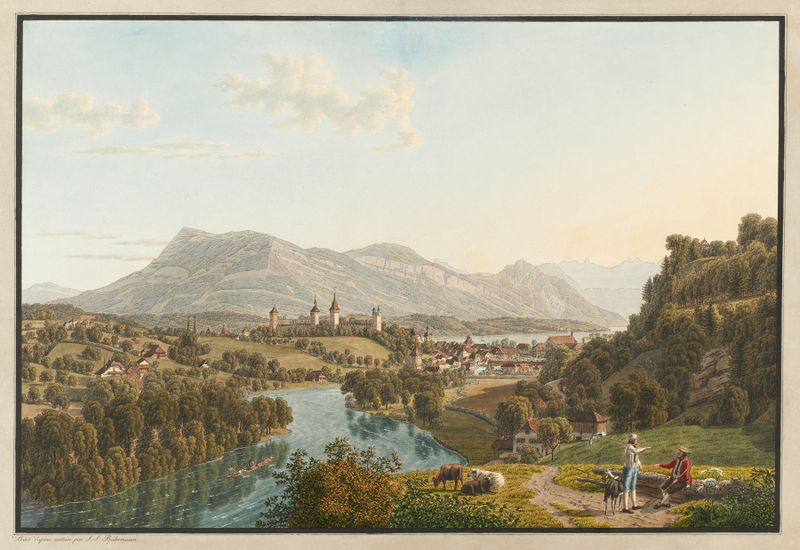
Luzern, von Nordwesten
Johann Jakob Biedermann

Sankt Gallen, von Norden
Johann Jakob Biedermann

Le Glacier nommé Rosenlaui, à côté du Wetterhorn
Johann Jakob Biedermann

Gottstatt, Kloster, von Nordwesten
Johann Jakob Biedermann
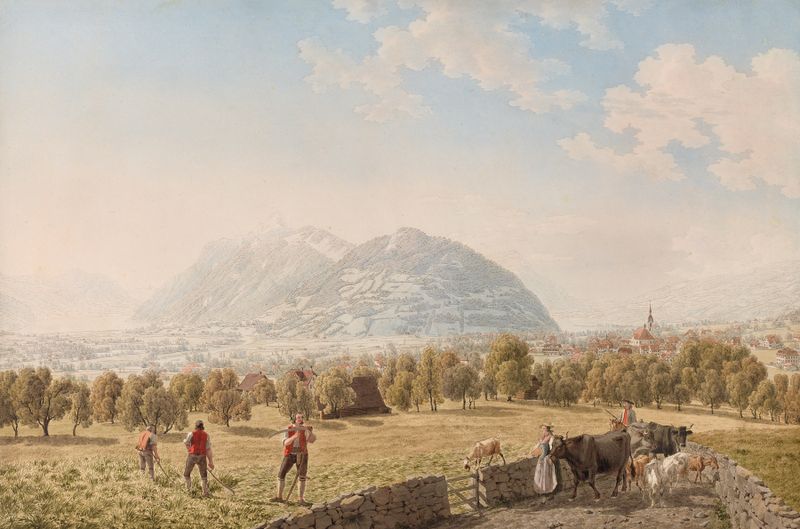
Schwyz, von Osten
Johann Jakob Biedermann

Twann und Bielersee von Nordosten
Johann Jakob Biedermann

Luzern, von Nordwesten
Johann Jakob Biedermann

Luzern, von Südwesten
Johann Jakob Biedermann
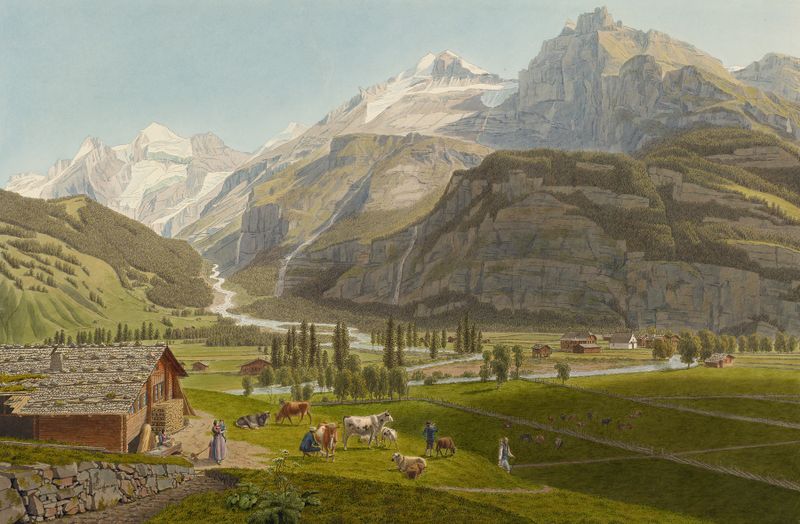
Kandersteg und das Kandertal, von Norden
Johann Jakob Biedermann

Schaffhausen, von Westen
Johann Jakob Biedermann





