
Abdijruïne van Aberbrothwick bij avond — History & Facts
Is this a mirror — or a memory? In the twilight glow, the ruins of Aberbrothwick stand as a testament to time, evoking a poignant sense of rebirth amidst decay. Look to the foreground where the crumbling stones emerge from the rich, warm earth, a palette of browns and soft greens inviting the eye. Notice how the fading light kisses the edges of the ancient architecture, casting elongated shadows that dance across the surface. This interplay of light and dark not only highlights the structure's intricate details but also establishes an atmosphere of stillness, as if the ghostly whispers of the past are woven into the very fabric of the scene. Deeper meanings unfold in the juxtaposition between the stone edifice and the lush, vibrant landscape surrounding it.
The ruin, though weathered and forgotten, flourishes against the backdrop of nature's resilience—an embodiment of life reclaiming the remnants of human endeavor. The serene water in the foreground reflects both the structure’s silhouette and the setting sun, merging memory with reality, hinting at the cyclical nature of existence and the possibility of renewal even in desolation. Created in 1848, this piece emerged during a pivotal time for David Roberts, who was deeply influenced by Romanticism and the burgeoning fascination with the sublime in art. Living in an era marked by the Industrial Revolution and its impact on landscapes and heritage, Roberts traveled extensively, capturing historical sites.
His work reflects a yearning for the past and a contemplation of humanity's connection to its own history, encapsulating both the grandeur and fragility of existence.
More Artworks by David Roberts
Browse all →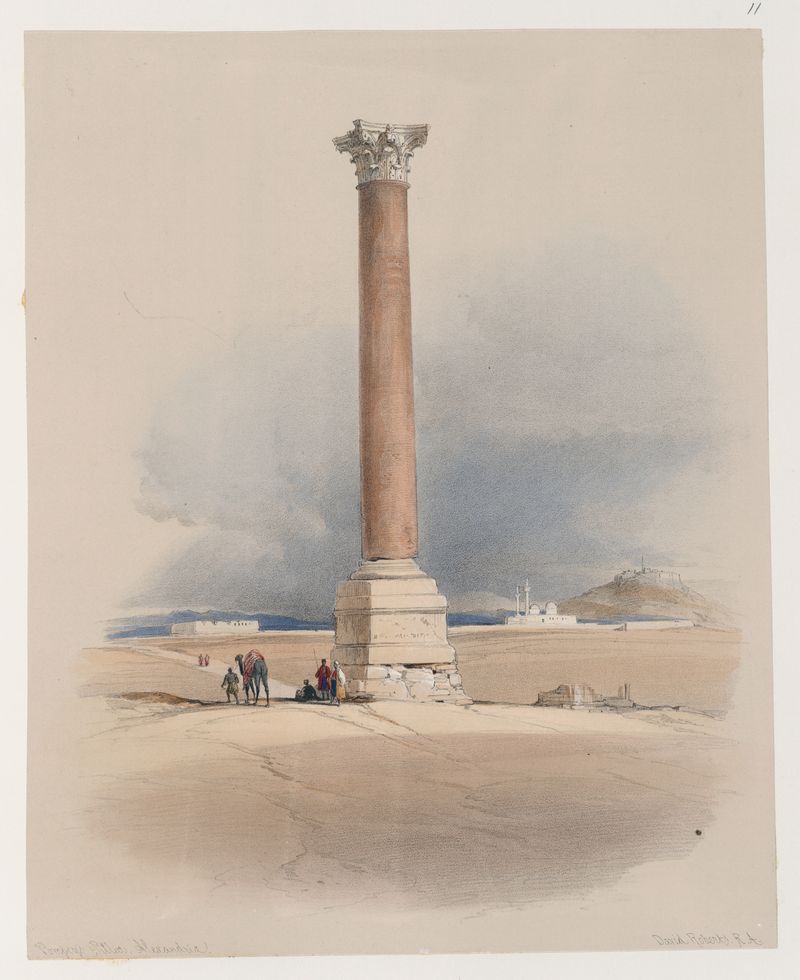
Pompey’s Pillar, Alexandria.
David Roberts

Approach to the Fortress of Ibrim.
David Roberts

Karnac [Karnak]. Nov. 29th, 1838.
David Roberts
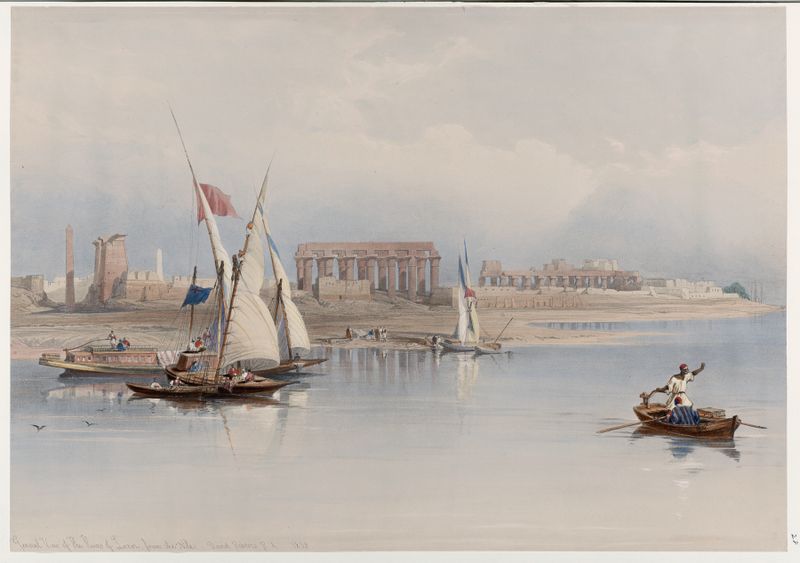
General view of the ruins of Luxor, from the Nile. 1838.
David Roberts

Statues of Memnon at Thebes, during the inundation.
David Roberts

Entrance to the tombs of the kings of Thebes. Bab-el-Malouk [Bîbân al-Mulûk].
David Roberts

The Fortress of the Alhambra, Granada
David Roberts
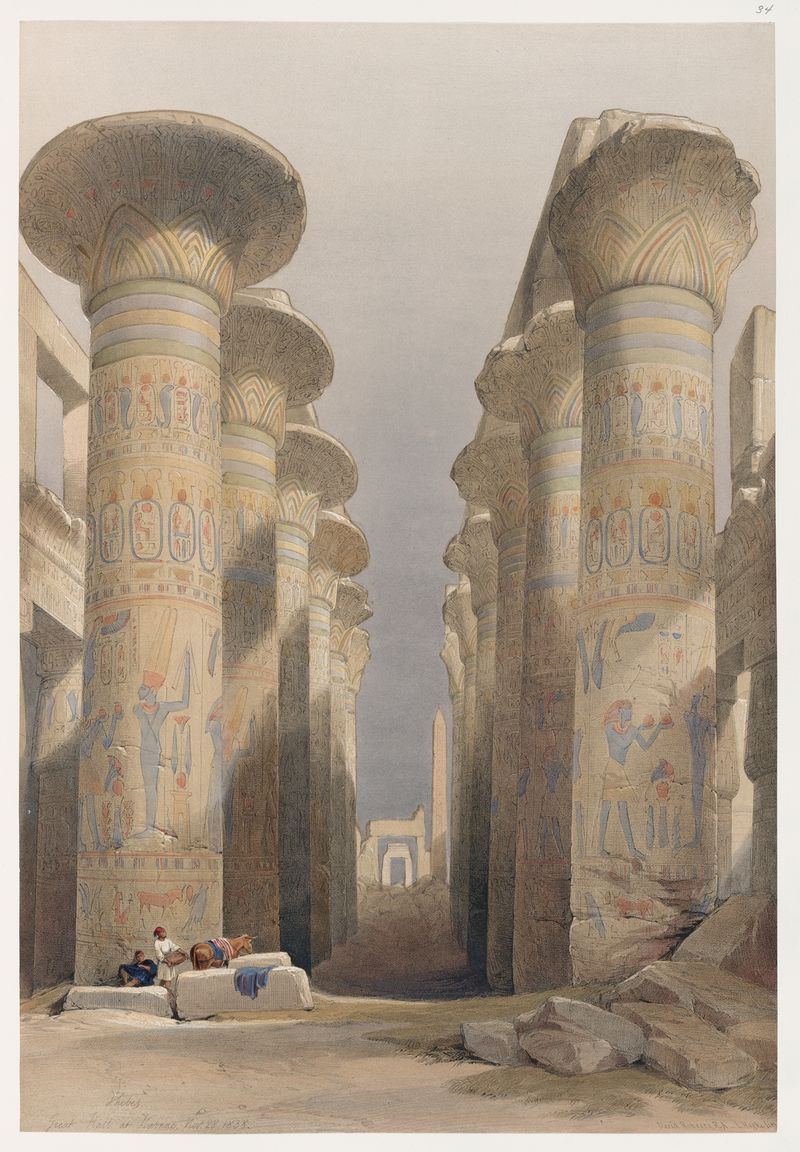
Thebes. Great Hall at Karnak. Nov. 28, 1838.
David Roberts
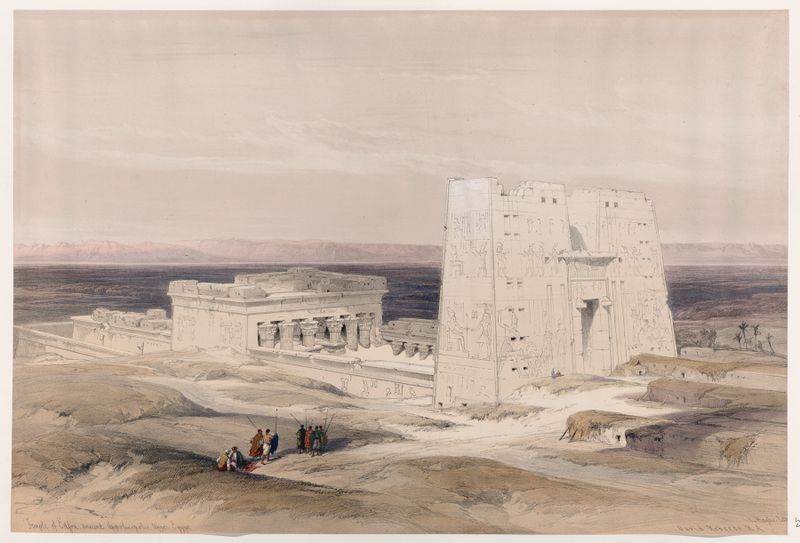
Temple of Edfou [Idfû], ancient Appolinopolis, Upper Egypt.
David Roberts

Temple of Kalabshee [Kalabsha, Kalâbishah], Nubia. Nov. 1838.
David Roberts
More Architecture Art
Browse all →
The statue of Liberty
Frédéric Auguste Bartholdi

View of Houses in Delft, Known as ‘The Little Street’
Johannes Vermeer

View of Houses in Delft, Known as ‘The Little Street’
Johannes Vermeer

The Cathedral in Rouen. The portal, Grey Weather
Claude Monet

The yellow house
Vincent van Gogh

The Church in Auvers-sur-Oise, View from the Chevet
Vincent van Gogh