Abendstimmung in den Pontinischen Sümpfen — History & Facts
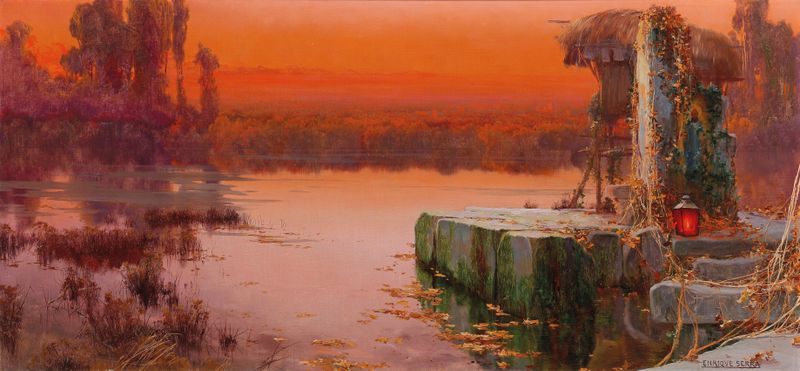
In a realm marked by silence and solitude, emptiness becomes a canvas for the most profound explorations of the spirit. Look to the center of Abendstimmung in den Pontinischen Sümpfen, where the muted tones of twilight envelop the landscape. The low-hanging clouds cast an ethereal glow over the marsh, their delicate hues of lavender and blue blending seamlessly into the water below. Notice how the artist meticulously plays with light and shadow, emphasizing the gentle ripples that shatter the stillness, inviting a deeper contemplation of nature's quiet mysteries. The painting speaks of contrasts—between light and dark, fullness and emptiness.
Each brushstroke captures the fleeting moment when day surrenders to night, revealing a world that is both alive and desolate. The solitary figure in the foreground, seemingly lost in thought, invites viewers to ponder the weight of solitude amidst the vastness of the landscape. The stillness of the marsh serves as a backdrop to the internal dialogue between the individual and the universe, a poignant reminder of our own existential musings in moments of isolation. In 1896, Enric Serra Auqué painted this work during a time of burgeoning artistic exploration in Europe, as the Impressionist movement was beginning to flourish.
Living in Spain, he was influenced by both the natural beauty around him and the shifting tides of artistic expression. This piece reflects his response to a world increasingly filled with noise, offering a tranquil yet evocative glimpse into the depths of human emotion through the lens of the serene yet lonely Pontine Marshes.